



Mexican Customer Visit for Forming Machine and Dicing Line
2026-09-16 15:25Mexican Customer Visits Henco Machinery to Discuss Forming Machine and Dicing Line
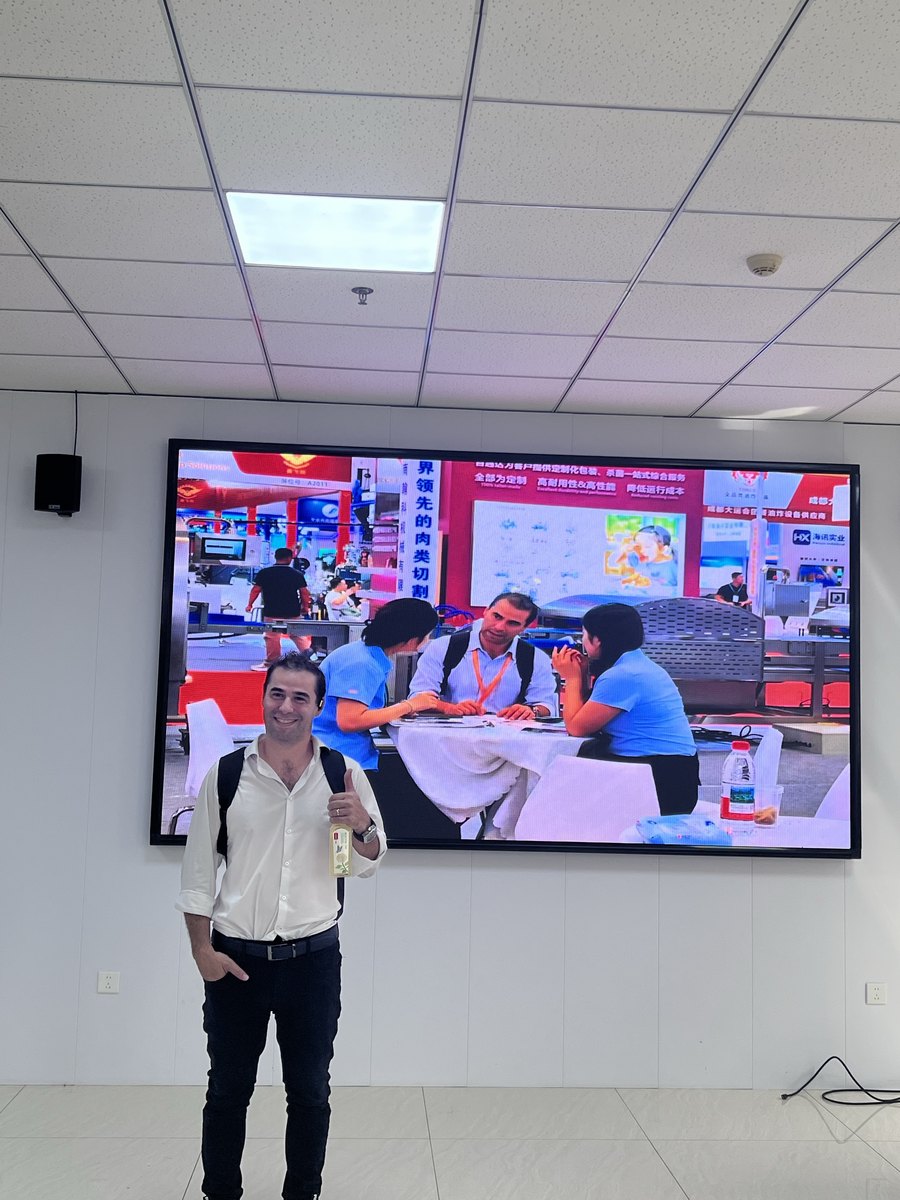
On September 16, 2026, a customer delegation from Mexico visited Jinan Henco Machinery Co., Ltd. in Jinan, Shandong Province. The delegation came with two specific interests: a food forming machine and a dicing line for their production. If you would like to explore a similar project, our factory is open to customers by appointment.
The visit began with a review of the customer's product range and target output. Within an hour the discussion had moved from individual machines to line layout, because forming and dicing sit at different points of the same production flow in most plants.
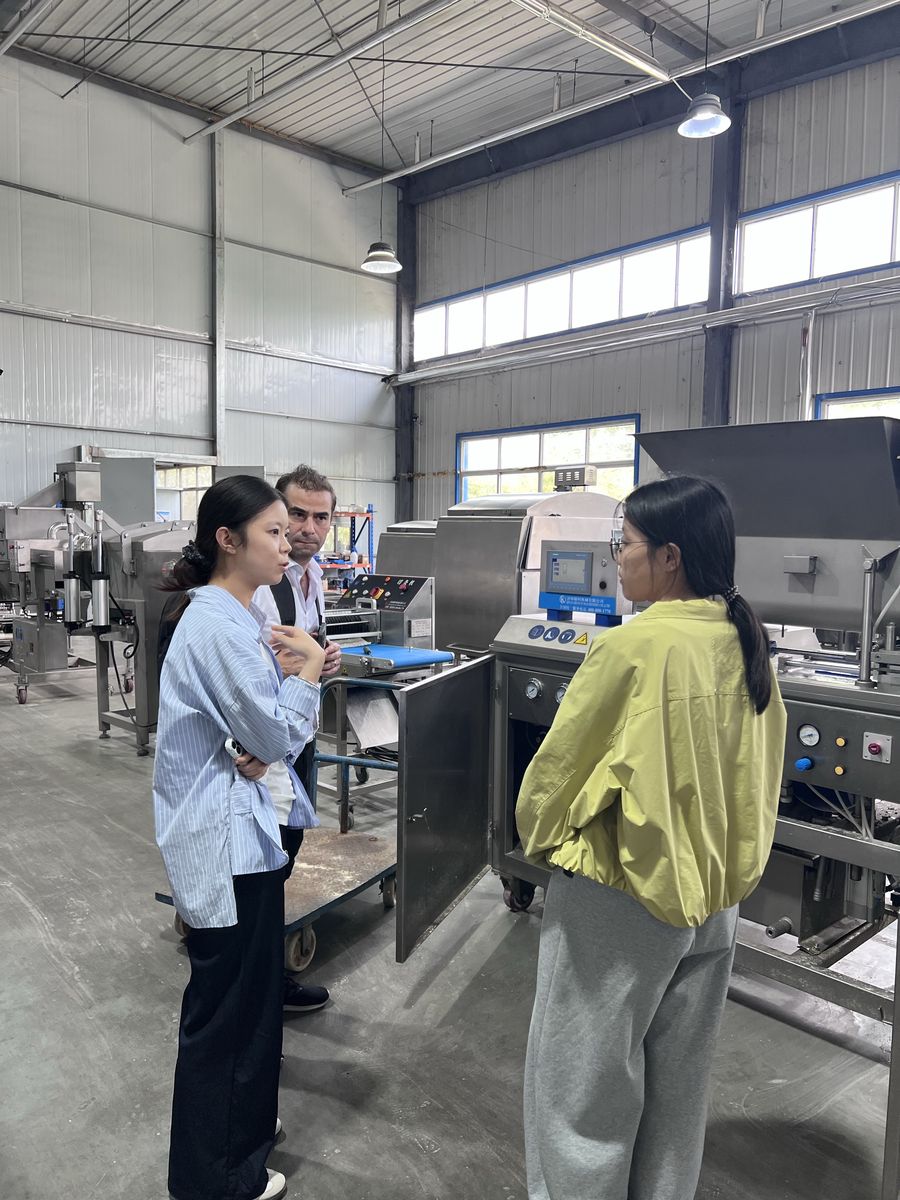
Meeting in Jinan: What the Customer Came to See
The delegation arrived with a clear brief. They wanted to form portions to a consistent weight, and they wanted to cut product into cubes of a repeatable size. Those two requirements pull in different directions, so the first task was to agree where each machine would sit in their plant.
Our engineers asked for the details that decide machine selection: the product to be processed, the target piece size, the hourly output, and the state of the raw material when it reaches the machine. Whether meat arrives fresh, chilled or frozen changes the cutting method, and it changes the blade design as well.
The answers shaped the rest of the day. Forming was discussed first, then dicing, and finally how the two stages connect through conveyors and buffer capacity.
The Forming Machine: What the Customer Asked
Forming is where portion weight and shape are decided, so most of the technical questions came back to consistency. The delegation wanted to know what happens to portion weight when the mix changes, and how quickly the machine can be adjusted between products.
Our team explained the two adjustments that matter. Portion weight is set by the mould plate, and the filling pressure controls how firmly the product is packed into it. Changing a product usually means changing the plate and adjusting the pressure, which is a short job rather than a line rebuild.
We also covered the wider range. The food forming machines cover different shapes and capacities, and the automatic food forming and battering process line adds coating stages for customers who produce patties, nuggets or croquettes. The delegation asked how much of that line could be added later, and the answer is that it can be built up in stages as their volume grows.
One question that came up repeatedly was what happens to the product during forming. Shaping should not crush the texture, because a portion that holds its weight but loses its bite is not a good result.
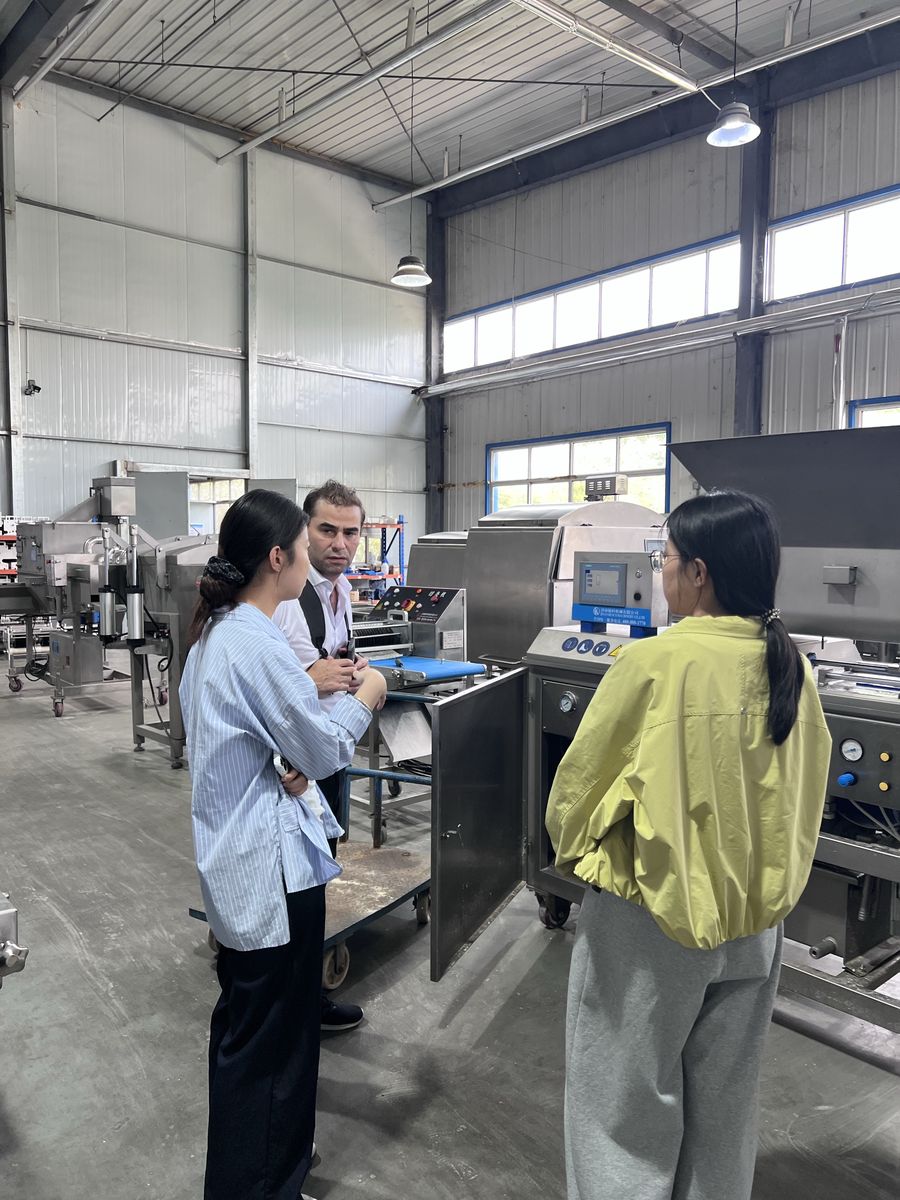
The Dicing Machine: Cutting Product into Cubes
The dicing machine was the second interest, and the discussion moved quickly to raw material condition. Cutting a fresh block and cutting a frozen one are different engineering problems, and a dicing machine specified for one will disappoint on the other.
The technical conversation covered blade type, cutting force and how the machine handles blocks that come straight from cold storage. Frozen material needs a heavier cutting action because the product resists the blade, and it needs a drive that holds its speed under that load rather than slowing down at the end of a stroke.
Our range covers both situations. The frozen meat dicing machine handles blocks that arrive hard, while the vegetable slice, shred and dice cutting machine covers products where cut size changes more often during a shift. Where the cut is more specific, the wider food cutting machine range includes strip and slicer variants.
The delegation also asked about cube size consistency across a full shift on the dicing machine. Blade condition is the main variable. Cutting blades wear progressively rather than failing suddenly, so the cut size drifts over time unless the blades are inspected on a schedule.
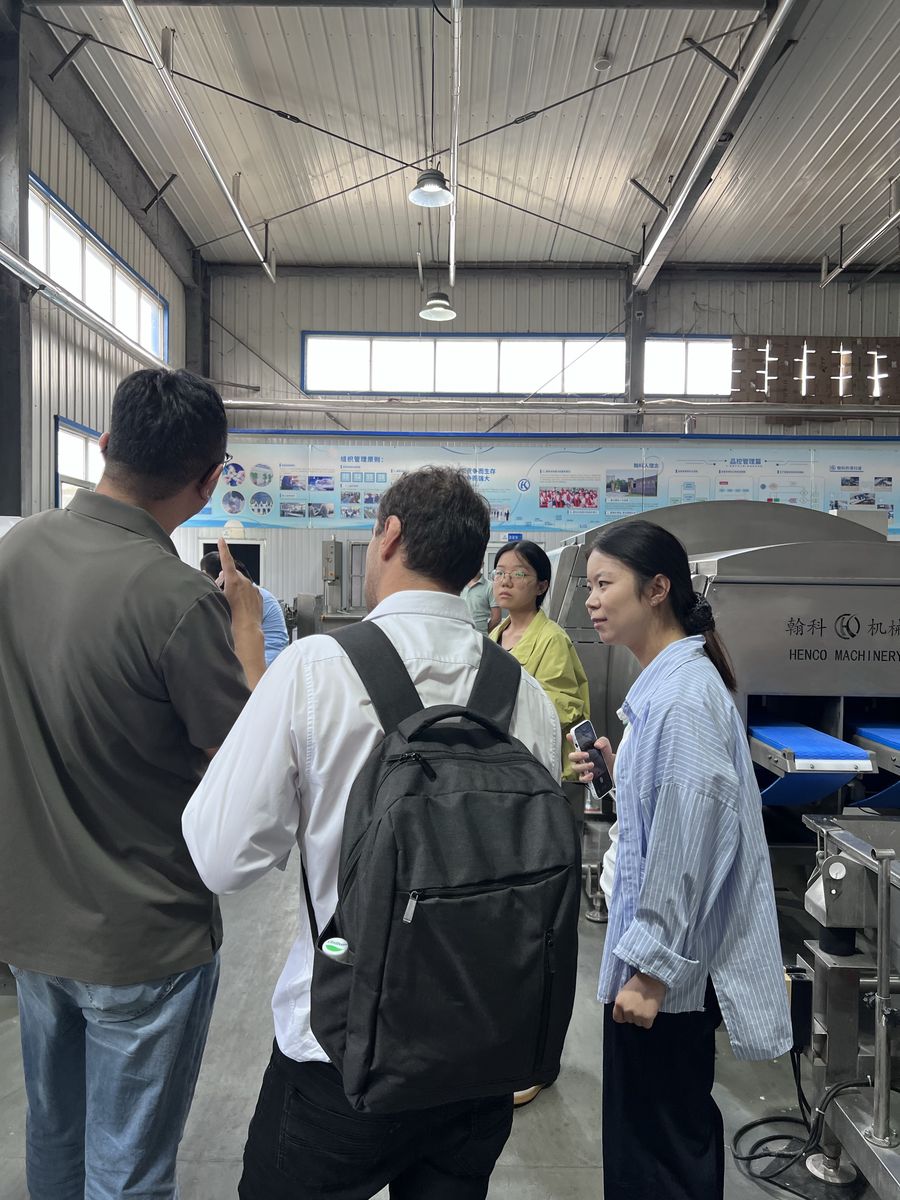
How the Two Machines Work Together
Forming and dicing rarely sit next to each other on the floor, but they belong to the same conversation in many plants. A customer who dices product for one recipe often forms product for another, and both stages feed the same packing area.
The delegation asked how the two stages would balance. The useful question is not total capacity but the capacity of the slowest stage, because a faster machine upstream simply builds a queue. Our engineers worked through the numbers for their product range and sketched how a conveyor and a short buffer between the food forming machine and the dicing machine would keep both of them busy.
For customers building toward a full plant, the same discussion applies to the wider food processing line, and to complete configurations such as the hamburger patty and chicken nugget process line.
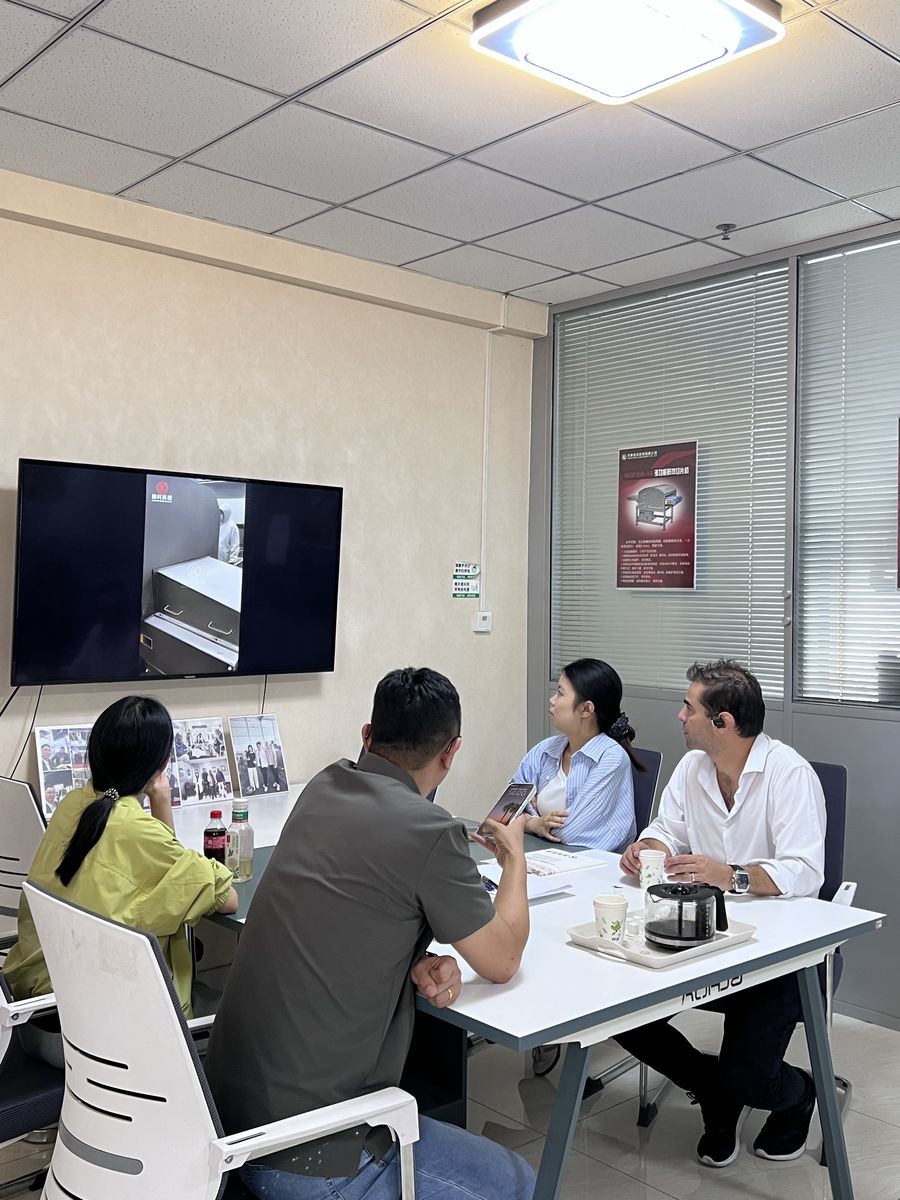
What the Factory Tour Covered
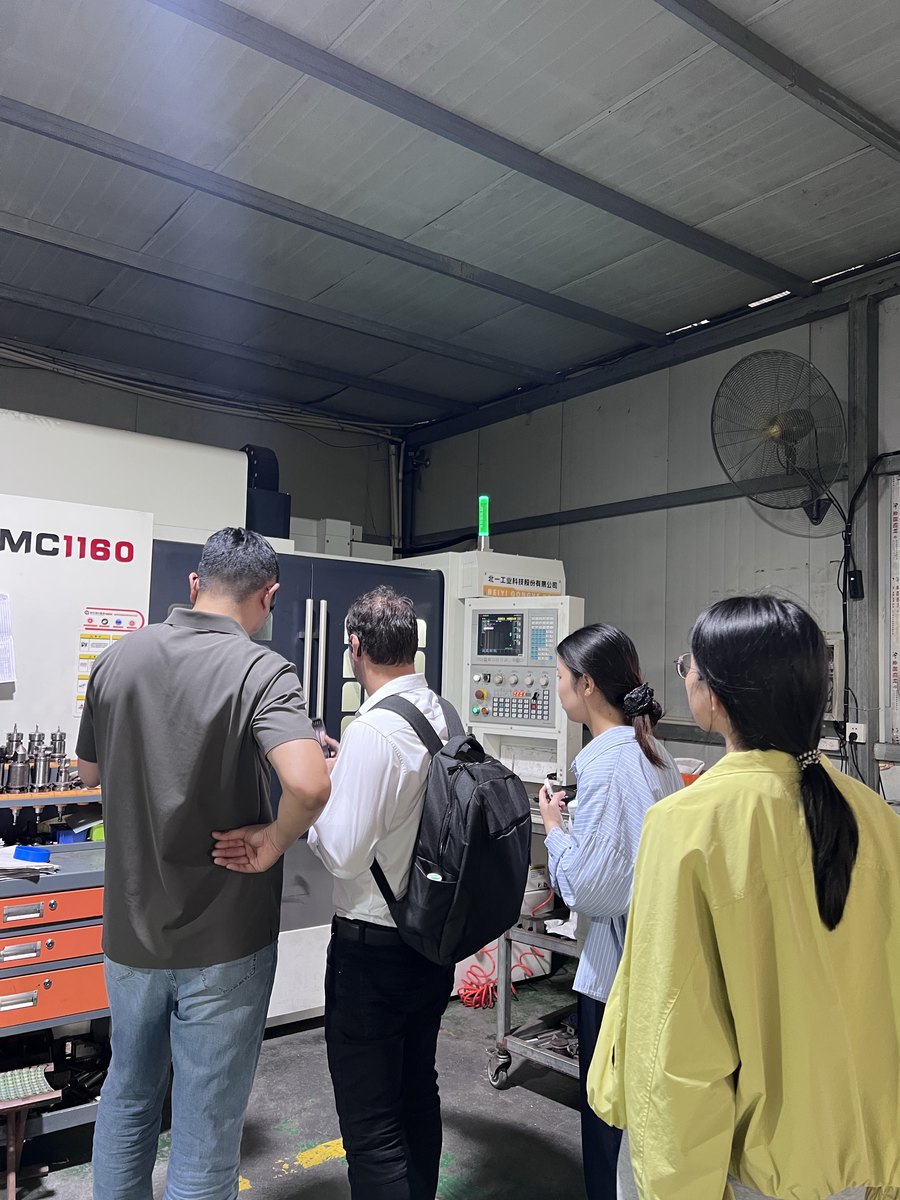
The delegation spent the second half of the visit on the shop floor. They walked through the fabrication and assembly areas and looked at machine frames, drives and control panels at each stage rather than at finished units only.
Food contact parts on our machines are made in grade 304 stainless steel. Grade 304 contains about 18–20% chromium and 8–10.5% nickel, and those two elements are what give the surface its corrosion resistance. For products that are high in salt, or where equipment is washed with aggressive cleaning chemicals, we specify grade 316 instead. Grade 316 adds roughly 2–3% molybdenum and resists chloride attack far better.
The delegation also saw how machines are tested before dispatch. Every unit is run before it is packed, and the test record travels with the machine so the receiving team has a reference for commissioning.
Certification, Documentation and Shipping to Mexico
Export projects fail on paperwork more often than on machinery, so this part of the visit was treated as a technical topic rather than an administrative one.
Machines can be supplied with CE certification where the destination market requires it, and each shipment travels with a commercial invoice, packing list, bill of lading and certificate of origin. Our team walked through a sample document set so the customer could see exactly what arrives and when.
Shipping to Mexico is well established from Qingdao and other Chinese ports. The practical questions are the port of discharge, the Incoterm that suits the customer's customs broker, and whether a full container or a shared load makes more sense for the first order.
Next Steps for This Project
The visit ended with a list of information to exchange rather than a signed order. That is normal at this stage. Before a line is specified, we need the product list, the target piece sizes, the required hourly output and the available floor space.
Once those are confirmed, our engineers prepare a layout drawing and a proposal that names each machine in the flow, including the food forming machine and the dicing machine. For customers who want to adjust the configuration, or sell under their own brand, the same team handles OEM and ODM projects.
You can learn more about Henco Machinery, review our reliable spare parts and technical support arrangements, or send your requirement through the contact page.
FAQ: Visiting Henco Machinery from Mexico
Can you ship a food forming machine or a dicing machine to Mexico?
Yes. We export food processing machinery to North and South America, including Mexico, Canada, the United States, Brazil and Chile. Shipments leave from Chinese ports, and we can quote on the Incoterm that suits your customs broker.
Can we test our own product on the machines before ordering?
Yes, and we recommend it. Send a sample of your product ahead of the visit, or bring it with you, and we will run it on the relevant machine during your factory visit. A trial on your own material answers more questions than any specification sheet.
What documentation is provided for customs clearance?
Each shipment includes a commercial invoice, packing list, bill of lading and certificate of origin, together with the machine manual and a pre-shipment test record. CE certification is available where the destination market requires it.
How do we start a project?
Send us your product list, target piece sizes and hourly output. If you can, add photographs of the product and note how it is stored before processing. From that we can recommend a configuration and prepare a layout for discussion.
We are grateful to the delegation for making the trip from Mexico and for the detailed questions on both machines. Visits like this one are how most of our long-term export projects begin, and we are happy to arrange the same walkthrough for any customer who wants to see the factory before committing.