



Thai Customer Visits Henco for Food Forming Machine
2026-09-16 10:11Thai Customer Visits Henco Machinery to Discuss Food Forming Machine Distribution
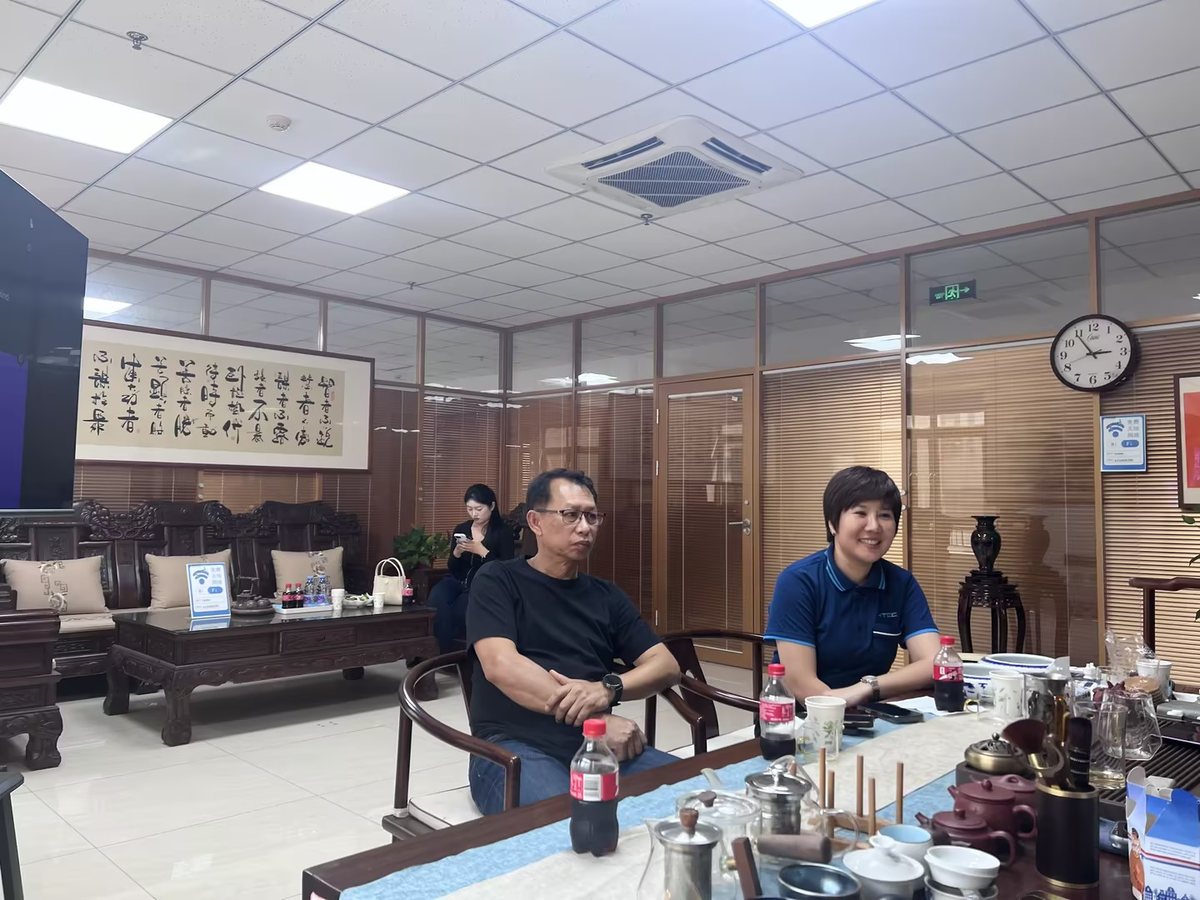
On September 15, 2026, a customer delegation from Thailand visited Jinan Henco Machinery Co., Ltd. in Jinan, Shandong Province. The visit had a clear purpose. The customer already runs a Henco forming machine in daily production, and came to see how the machines are built before discussing a distribution partnership in Thailand. If you would like to explore the same route, our factory is open to customers and partners by appointment.
The customer's feedback was simple and direct. The machine has performed well since it was installed, which is why the conversation moved from buying a single unit to representing the brand in a new market.
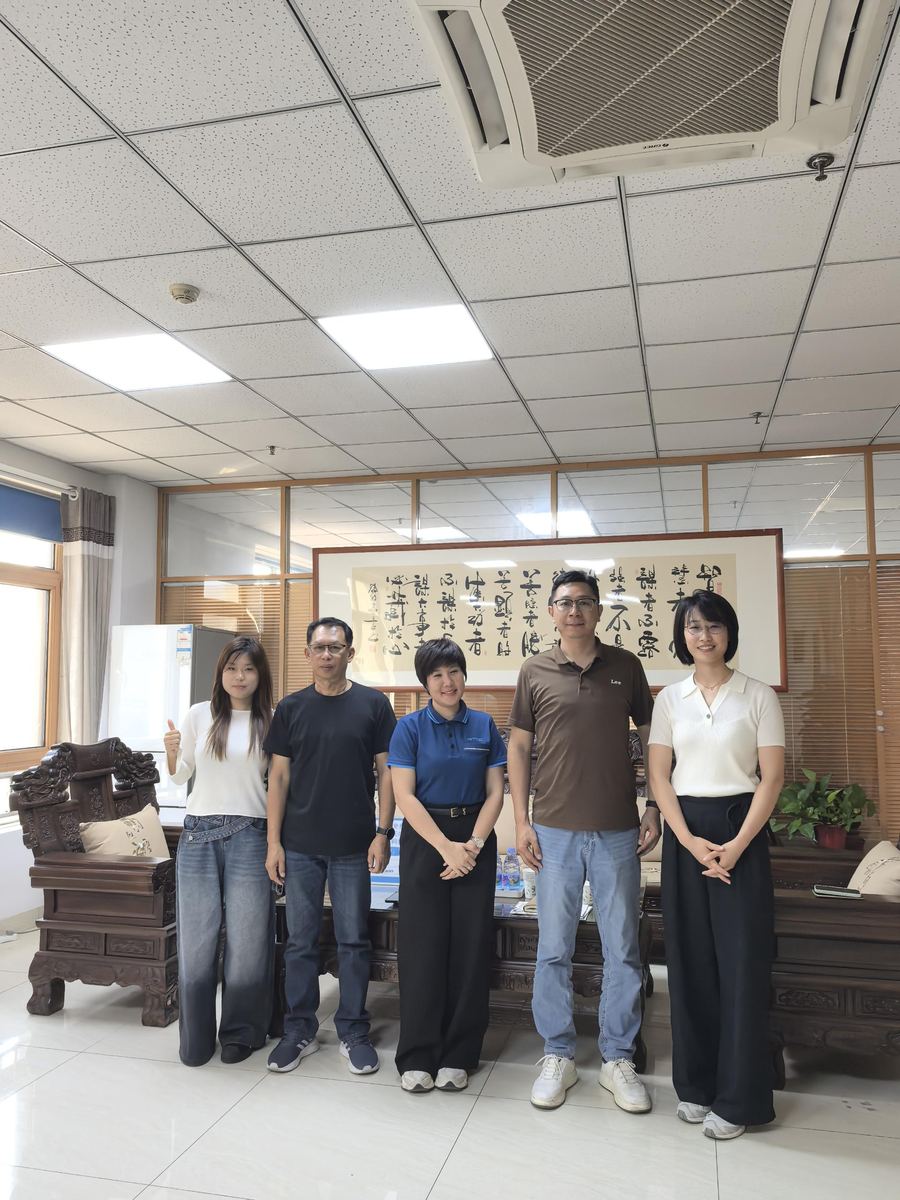
A Food Forming Machine Already Running in Daily Production
Many buyers judge a machine in the first month and then live with it for years. Coming back to the factory after the equipment has run in real production is a different kind of assessment, and it is the reason this visit carried more weight than a first-time enquiry.
The delegation arrived with production records for their own food forming machine rather than questions about brochures. That changed the agenda. Instead of covering the basics, the discussion went straight to the points that matter after installation: how consistent the formed portions are over a full shift, how long changeover takes, and what maintenance the machine needs.
Our team walked through the design decisions behind the forming stage. Portion weight is set by the mould plate and the filling pressure, and both can be adjusted without stopping the line for long. The customer confirmed that this matches what they see in their own plant.
Touring the Workshop: How the Machines Are Built
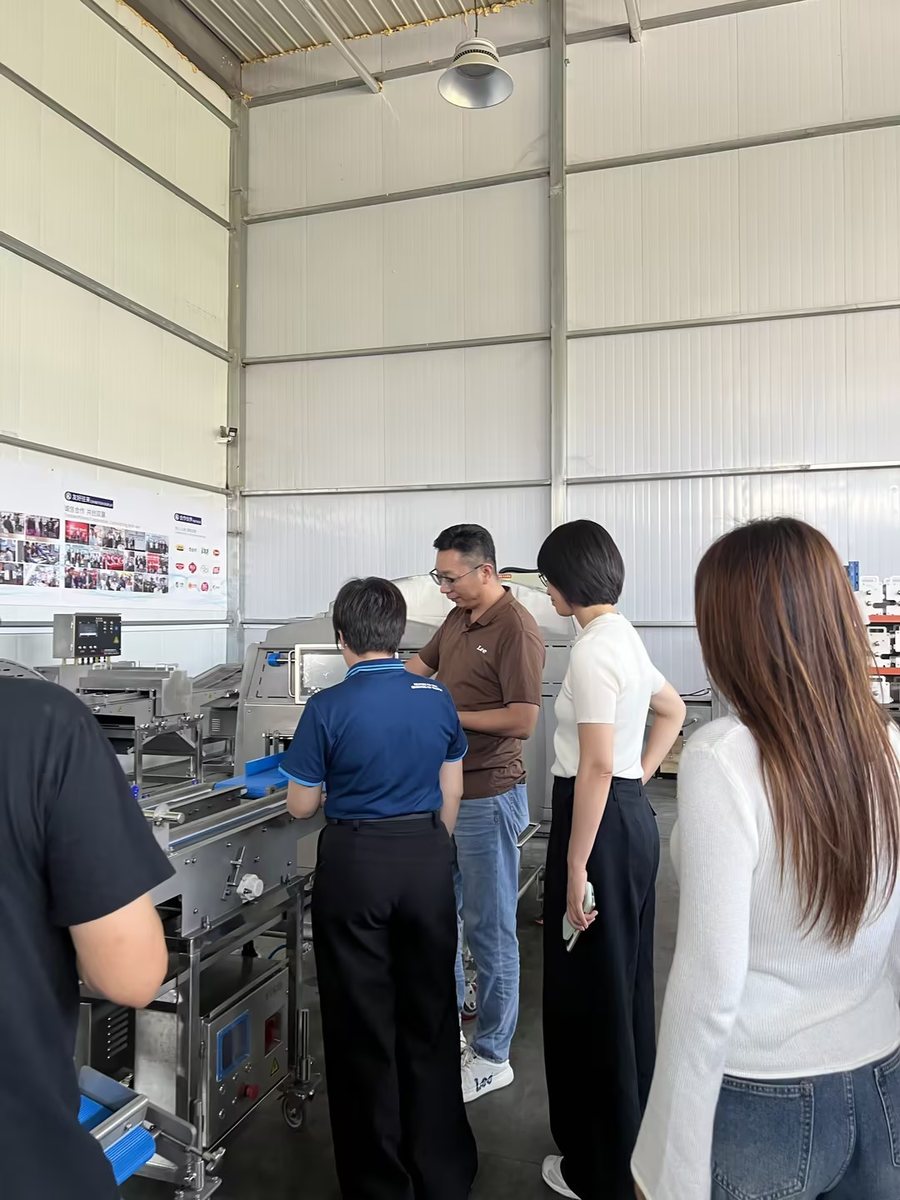
The delegation spent most of the visit on the shop floor rather than in the meeting room. They walked through the fabrication, assembly and testing areas, and looked at machine frames, conveyors and control panels at each stage.
Food contact parts on our machines are made in grade 304 stainless steel. Grade 304 contains about 18–20% chromium and 8–10.5% nickel, and those two elements are what give the surface its corrosion resistance. Where a product is high in salt, or where equipment is washed with aggressive chemicals, we specify grade 316 instead. Grade 316 adds roughly 2–3% molybdenum and resists chloride attack far better. These material choices were among the first things the delegation checked on the floor.
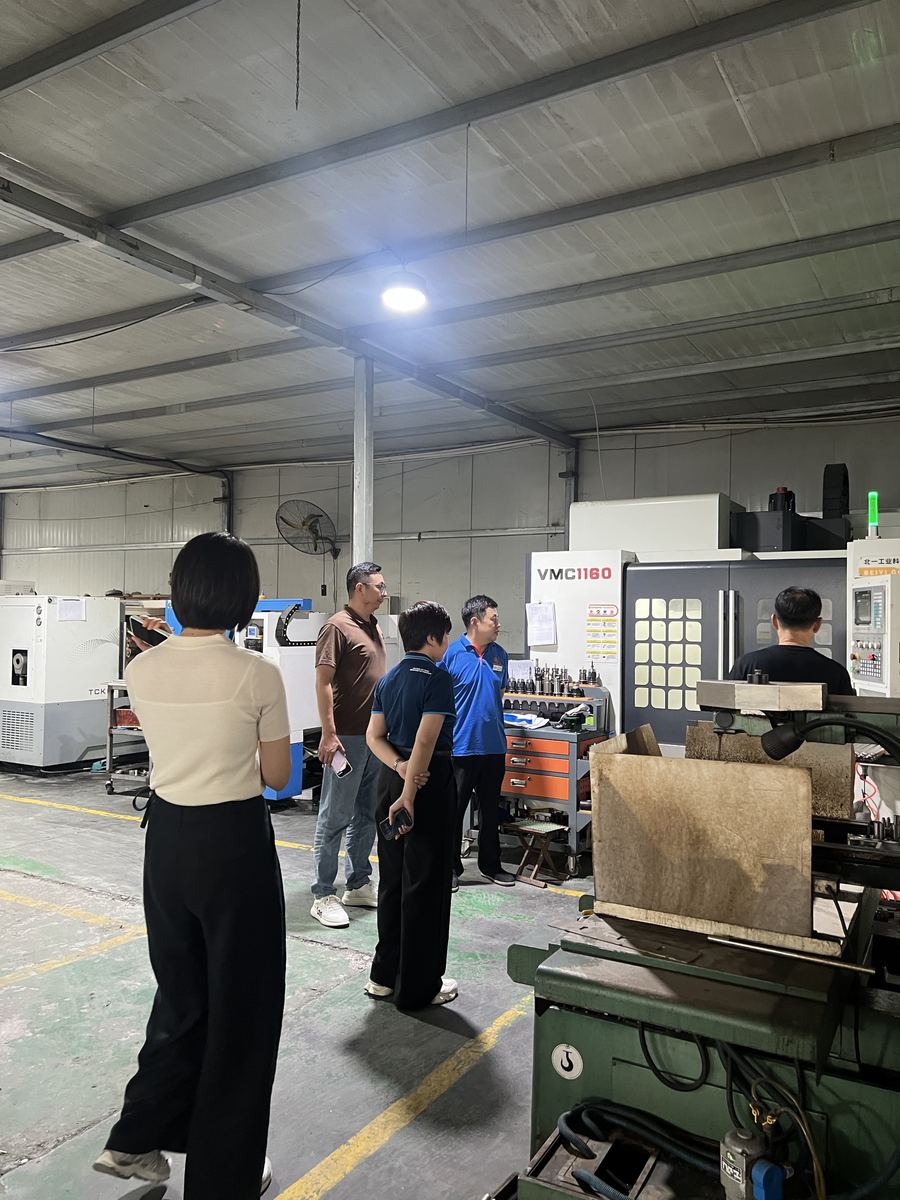
The delegation also looked at how machines are assembled and tested before dispatch. Every unit is run before it is packed, and the test record travels with the machine. For a distributor, that record matters twice: once for the end customer, and again when a technical question comes back months later.
What the Customer Wanted to Check
Three themes came up repeatedly during the walkthrough, and they are the same three that most overseas partners want to confirm before committing to a territory.
Build quality. They wanted to see the welds, the frame thickness and the guarding rather than read about them.
After-sales support. They asked how quickly a spare part reaches Thailand, and what happens when a fault cannot be diagnosed on site.
Capacity. They wanted to understand what monthly output the factory can actually hold when a distributor starts ordering regularly.
Answers to all three are covered further down this page, and we were able to show the warehouse and the test area rather than describe them.
From One Food Forming Machine to a Full Food Processing Line
Once the food forming machine had been assessed, the conversation widened. A distributor in a food processing market rarely sells one machine in isolation, because customers who form patties usually also coat them.
Our team explained how the food forming machines fit together with the automatic food forming and battering process line, and where a forming stage sits inside a larger food processing line. For a market like Thailand, where poultry and seafood processing is significant, the combination of forming and coating in one flow is often the more useful conversation.
The delegation also asked about the hamburger patty and chicken nugget process line, because several of their own customers are moving from manual preparation to continuous production. For a distributor, being able to supply a complete food processing line rather than a single unit is what keeps a customer from shopping elsewhere for the next stage.
Talking About Distribution in Thailand
The second half of the visit focused on what a distribution partnership would actually involve. That is a broader question than price, and both sides treated it as such.
Topics included the territory a partner would cover, the technical training their engineers would need, how spare parts would be stocked locally, and how enquiries would be shared between us. Territory and training are usually the two items that decide whether a partnership works, because a distributor who cannot answer a technical question ends up losing the customer to a competitor.
No agreement was signed during the visit. Both sides agreed on the information they need before the next step, and the discussion continues.
Spare Parts and After-Sales Support
After-sales support is the part of a machinery purchase that is hardest to judge before you buy, and it is the first thing a distributor has to be confident about.
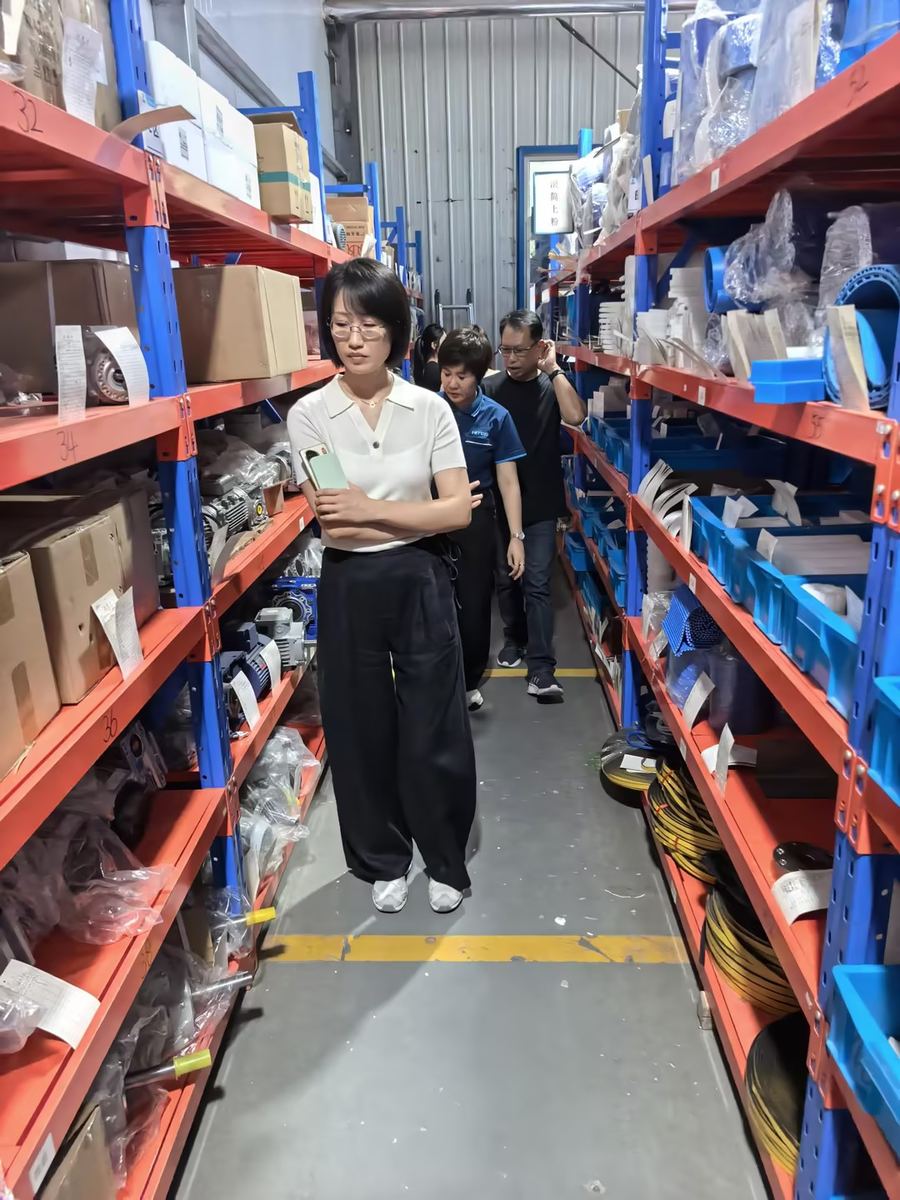
The delegation visited our parts warehouse during the tour. We keep fast-moving components in stock, and we supply an illustrated parts list with each machine so that a partner can identify a component without waiting for a reply. Technical questions are handled by the same engineers who build the machines, which usually means a fault can be diagnosed from photographs and a short description rather than a site visit.
More detail is set out on our reliable spare parts and technical support pages.
What Comes Next
The visit ended with a short list of actions rather than a broad statement of intent. That is deliberate. A partnership that starts with clear requirements tends to survive its first difficult order.
For customers reading this page, the same route is open to you. Machines are certified to CE requirements where the market demands it, and we can arrange a factory visit, a video walkthrough or a trial on your own product. You can learn more about Henco Machinery or send us your requirement directly.
FAQ: Visiting Henco Machinery as a Distributor
Can I visit the factory before becoming a distributor?
Yes. Customers and prospective partners are welcome to visit our factory in Jinan, Shandong Province. We recommend bringing your product specification and, if you already run our equipment, your production records. That lets the technical discussion start from real numbers instead of general questions.
What does Henco provide to overseas distributors?
Partner support covers technical training, an illustrated spare parts list, access to our engineering team for fault diagnosis, and product documentation in English. Territory, pricing and stock arrangements are discussed case by case, because the right structure depends on the market and on the partner's existing customer base.
Can a distributor sell machines under their own brand?
Yes. We build machines for customers who sell under their own brand, which is what our OEM and ODM service covers. That includes branding the machine, the manual and the control panel, and keeping the confirmed configuration on file so repeat orders are built to the same specification.
How do I start the conversation?
Send us your market, the machines you are interested in and your current customer profile through our contact page. We will reply with the information you need, and can arrange a factory visit or a live video walkthrough if travelling to China is not practical at this stage.
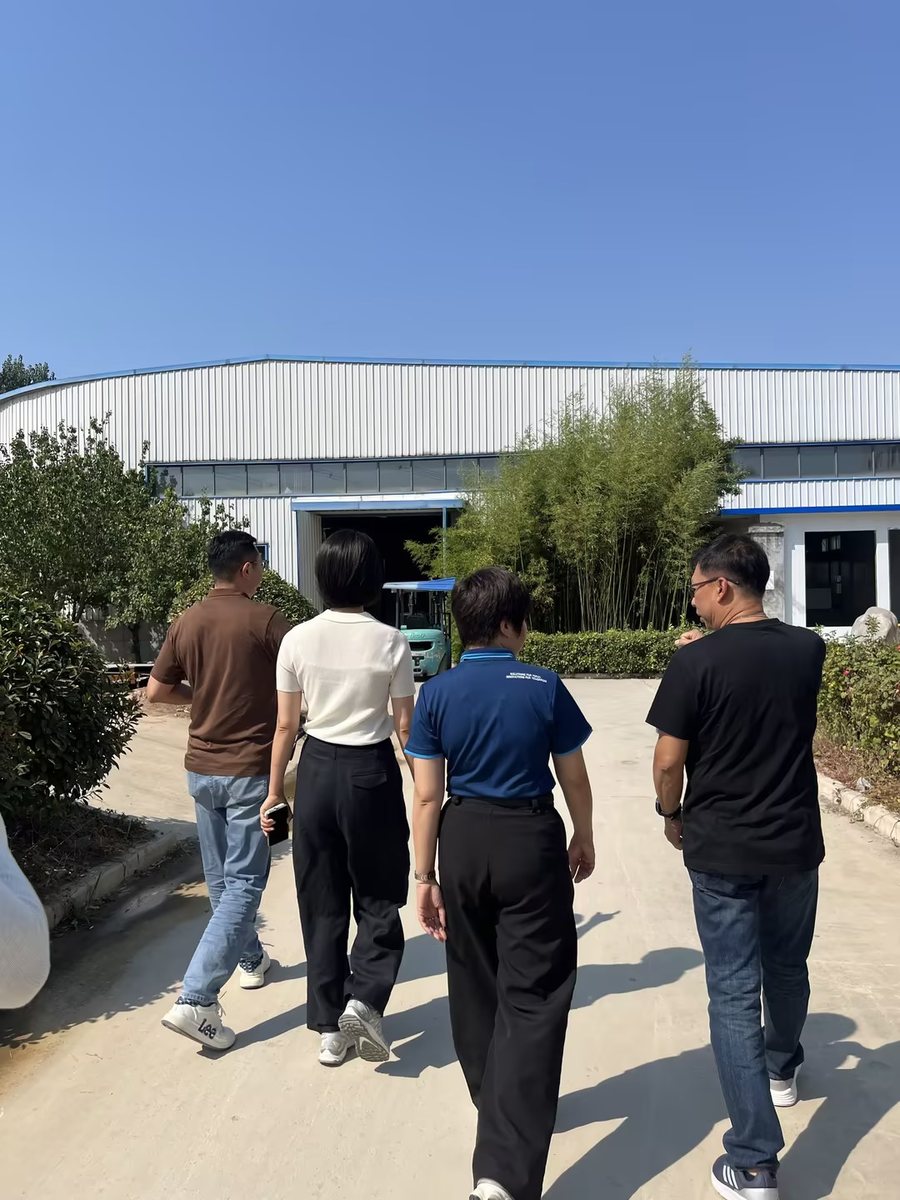
We are grateful to the delegation for making the trip and for the direct feedback on the machine they already operate. Visits like this one are how partnerships start, and we are happy to arrange the same for any customer or distributor who wants to see the factory before committing.