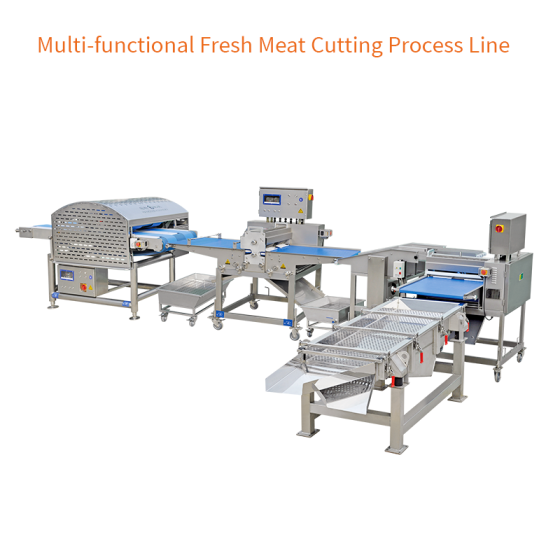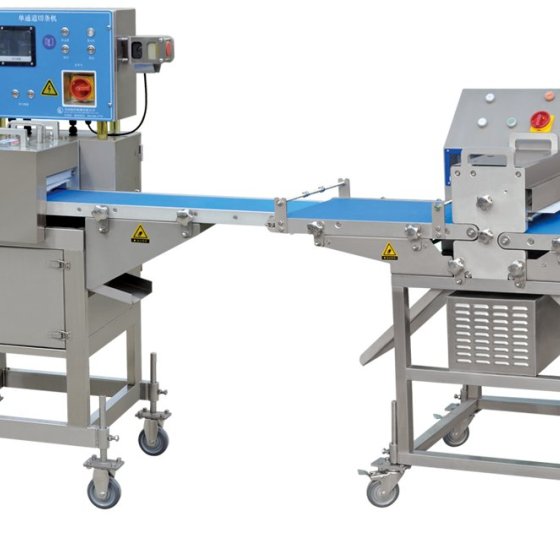



Food Forming And Battering Process Line
No matter meat, seafood, poultry or vegetable, the processing line can fulfill the processing procedure of forming,
predusting, battering, breading etc. And the equipment has the access to connect the fryer, cooker, instant freezer and packing
machine to complete a full automatic processing line for producing various of popular foodstuffs with fairly high added value.
- Information
- Video
Materials, hygiene and what the specification numbers mean
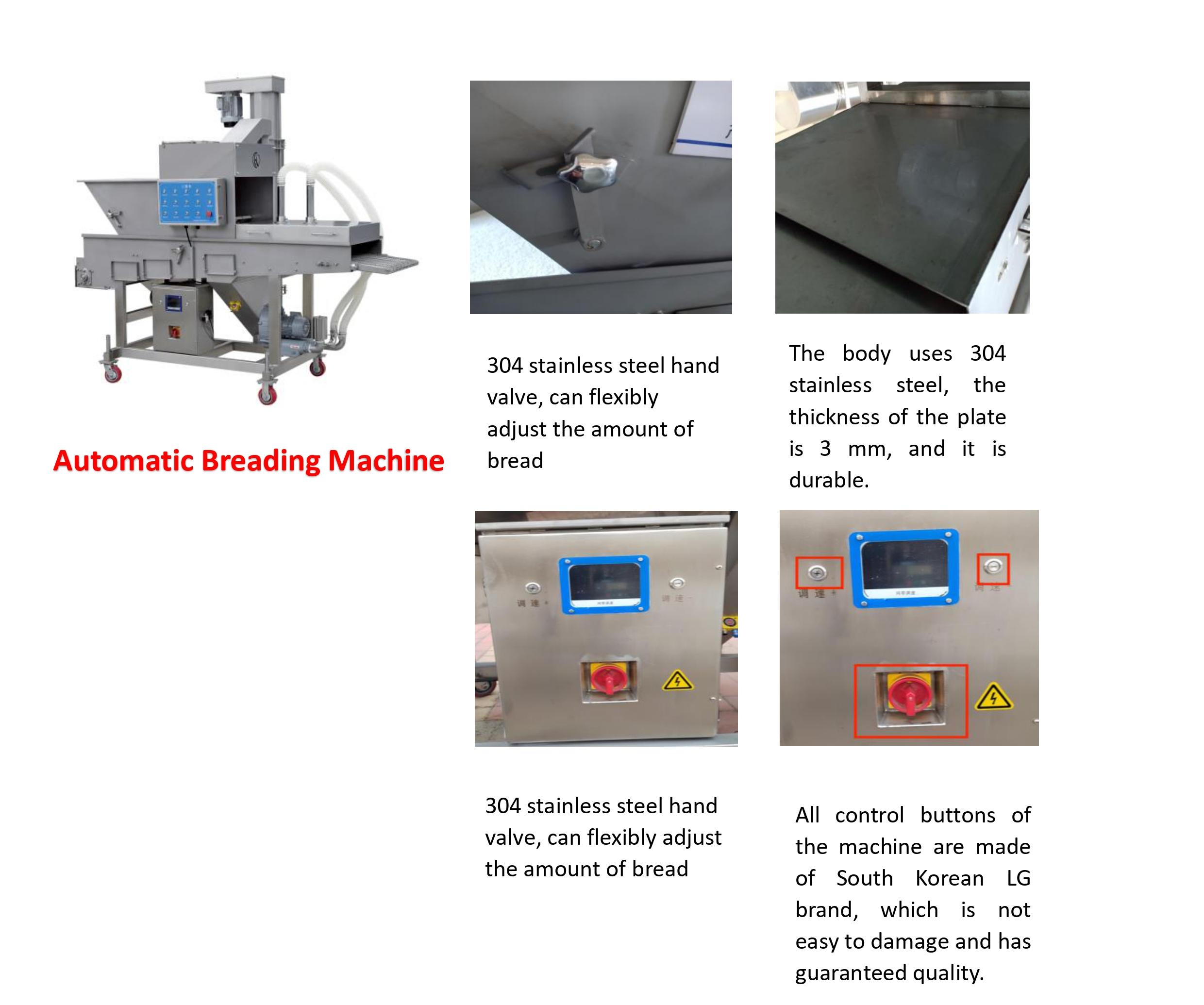
All food contact parts on this forming and battering line are grade 304 stainless steel. Grade 304 contains about 18% chromium and 8% nickel. That balance is what keeps the surface rust-free in a wet processing room. For salty product or daily caustic cleaning we supply grade 316L instead. Grade 316L adds 2–3% molybdenum to the chromium and nickel. The molybdenum is what resists chloride attack and pitting.
Lean meat is roughly 70% water. Two practical consequences follow. Every cut face loses moisture until the product is chilled or packed. Water also carries bacteria, so drainage and cleaning matter as much as cutting speed. Smooth welds, sloped surfaces and tool-free guards are the practical answer.
Cutting clearance is held within about 5% of the target portion thickness. That tolerance is what keeps portion weights stable from the first piece of a shift to the last.
Chilled product normally runs at 0–4 °C and frozen product below −18 °C. Tell us which you process, because feed, blade and drive settings differ between the two.
What should you check before ordering a forming and battering line?
Ask any supplier three questions. Which grade of stainless steel touches the product? What cutting tolerance is guaranteed in writing? And which wear parts are held in stock? Learn more about the configuration options for your plant, or explore the rest of our machine range.
Product brief introduction
No matter meat, seafood, poultry or vegetable, the processing line can fulfill the processing procedure of forming, predusting, battering, breading etc. And the equipment has the access to connect the fryer, cooker, instant freezer and packing machine to complete a full automatic processing line for producing various of popular foodstuffs with fairly high added value.
Product applications
Operation process
Detail presentation
Features and advantages
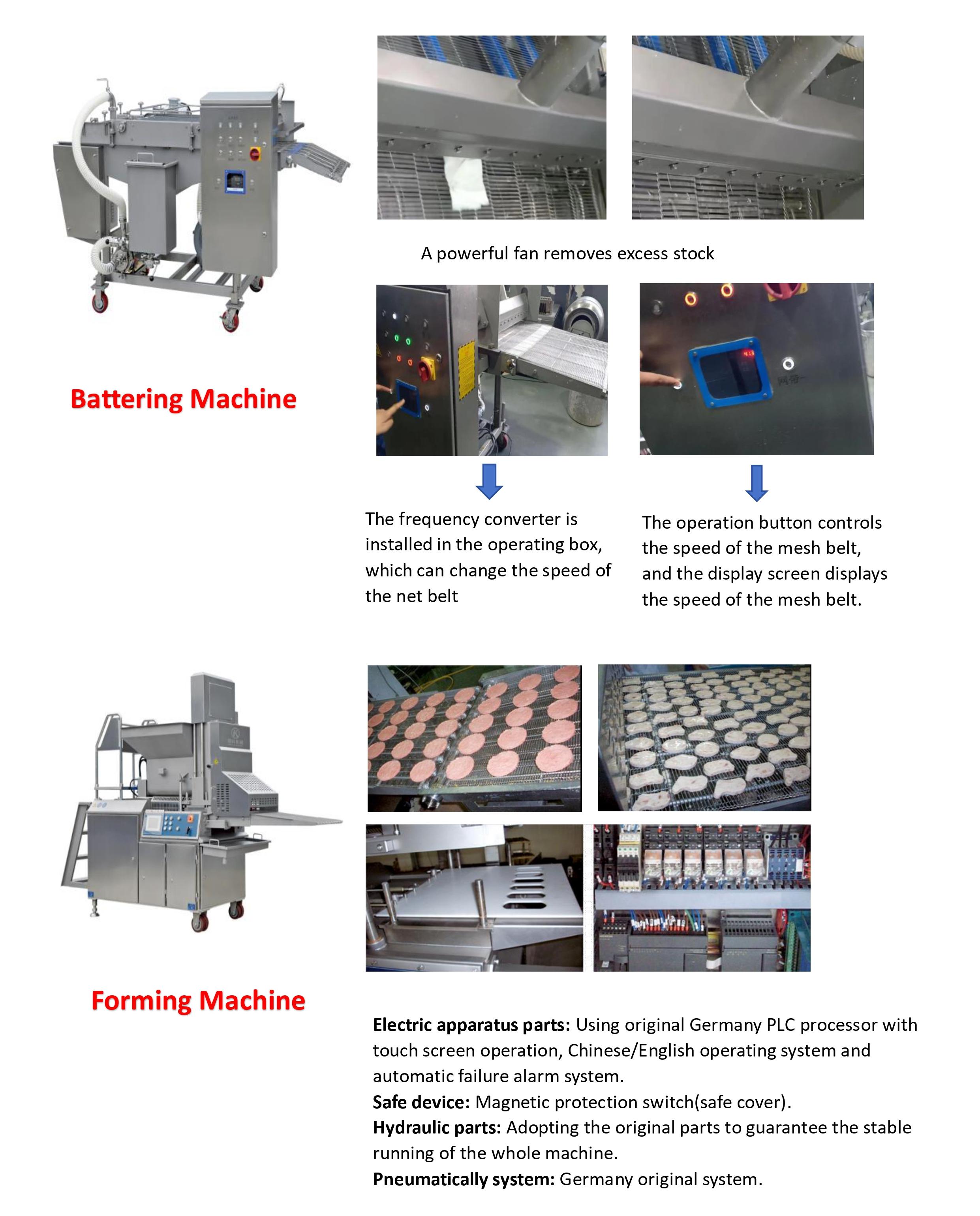
No matter meat, seafood, poultry or vegetable, the processing line can fulfill the processing procedure of forming, predusting, battering, breading etc. And the equipment has the access to connect the fryer, cooker, instant freezer and packing machine to complete a full automatic processing line for producing various of popular foodstuffs with fairly high added value.
Why Combine Forming and Battering in One Line
Forming and coating are two halves of the same job: a patty that is shaped correctly but coated unevenly will fail in the fryer just as surely as a badly formed one. Running forming and battering as one continuous line removes the manual transfer between them, which is where product gets damaged, cools down and loses shape.
How the Forming and Battering Line Works
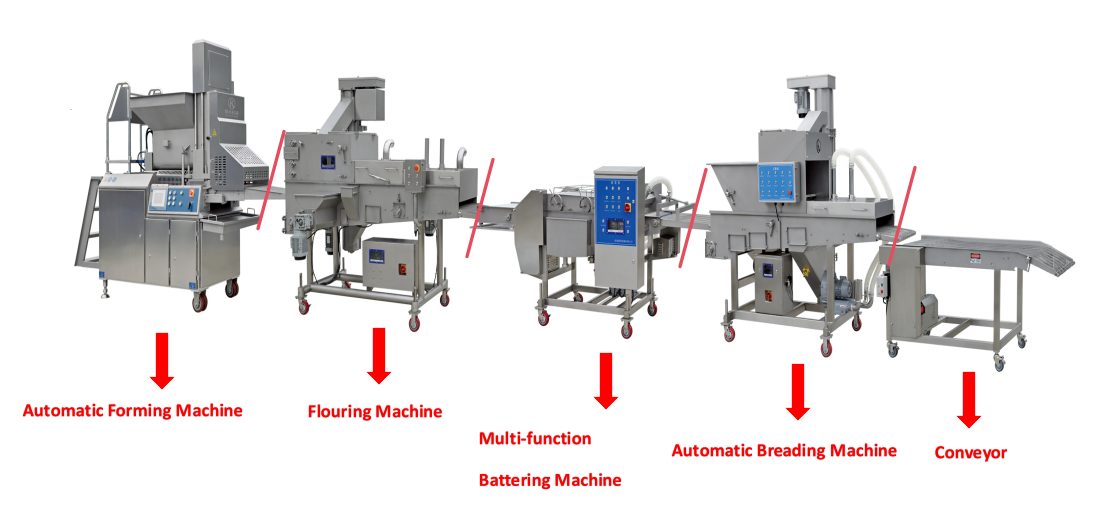
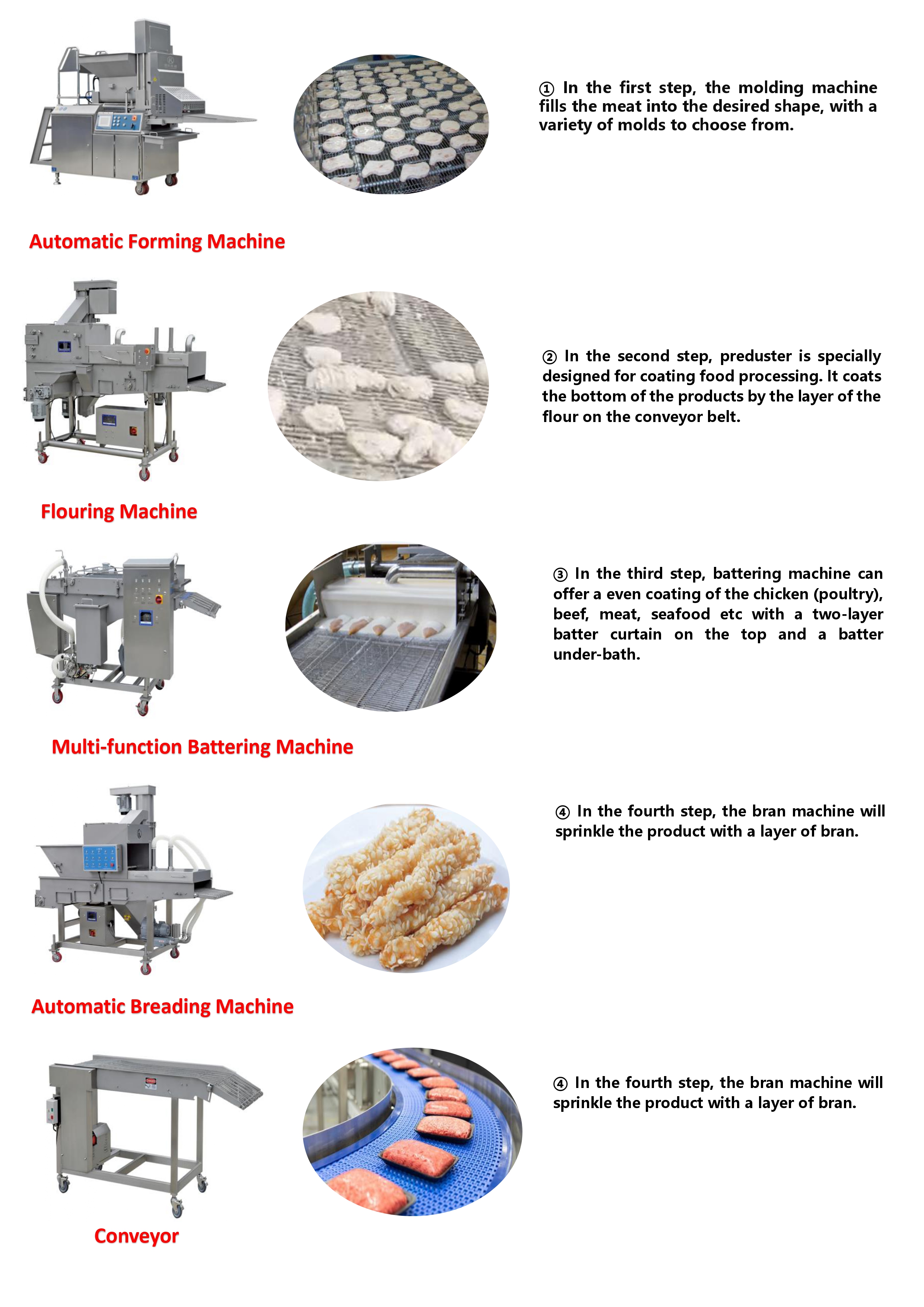
Raw material is fed to the former, which presses it into shaped portions on a belt. The formed product then passes through predusting, battering and breading stages in sequence. Each stage is connected by a short transfer conveyor with adjustable height and gap, and the whole line runs at a single coordinated speed so no stage starves or floods.
Coating Stages Explained
Predusting applies a fine flour layer that helps the batter grip. The battering stage coats the product in liquid batter, and the breading stage applies crumb on top. Running all three gives a coating that survives frying and freezing without falling off, and each stage remains individually adjustable so you can run a light coating for one product and a heavy one for another.
Cleaning, Changeover and Hygiene
Coating lines collect residue in every corner, so our design keeps belts, hoppers and spreaders removable without tools. Changeover between products includes cleaning the batter and crumb stages to prevent cross-contamination, and the line can be configured so this happens without dismantling the conveyors.
Installation, Training and After-Sales Support
We confirm conveyor heights, utility requirements and floor space from a layout drawing before the line is built. Commissioning includes setting each coating stage on your product and training operators on adjustment, changeover and cleaning. Spare belts, mould plates and spreader parts are kept in stock.
FAQ: Food Forming and Battering Process Line
What is a food forming and battering process line?
It is a set of connected machines that shapes minced or ground product into portions and then coats them with flour, batter and crumb in one continuous flow, ready for frying and freezing.
How to keep coating weight consistent across a shift?
Keep the batter viscosity and the crumb bed depth stable, run the recirculation continuously, and avoid stopping the line with product on the belt. Consistent settings matter more than frequent adjustment.
Can we start with part of the line and add stages later?
Yes. Many customers start with the former and add predusting, battering or breading later. We design the line with space and belt heights for the later stages so the upgrade does not require rebuilding.
What is the delivery time and warranty?
Forming and coating lines normally ship within 30 to 60 working days depending on configuration, with a 12-month warranty and engineer support for commissioning.