



- Home
- >
- News
- >
- Specifying a Custom Line
- >
Specifying a Custom Line
2026-11-06 16:48After Gulfood 2026: Specifying a Custom Processing Line at the Table
The halls at the Dubai World Trade Centre close at 17:00. The machines are still standing on stand S-404 when the conversation moves — out of the aisle, away from the noise, to a table with a laptop, a phone and two cups of coffee.
That table is where a custom food processing equipment project actually starts. Not with a catalogue, and not with a price list, but with a drawing being sketched on a screen while three people lean in.
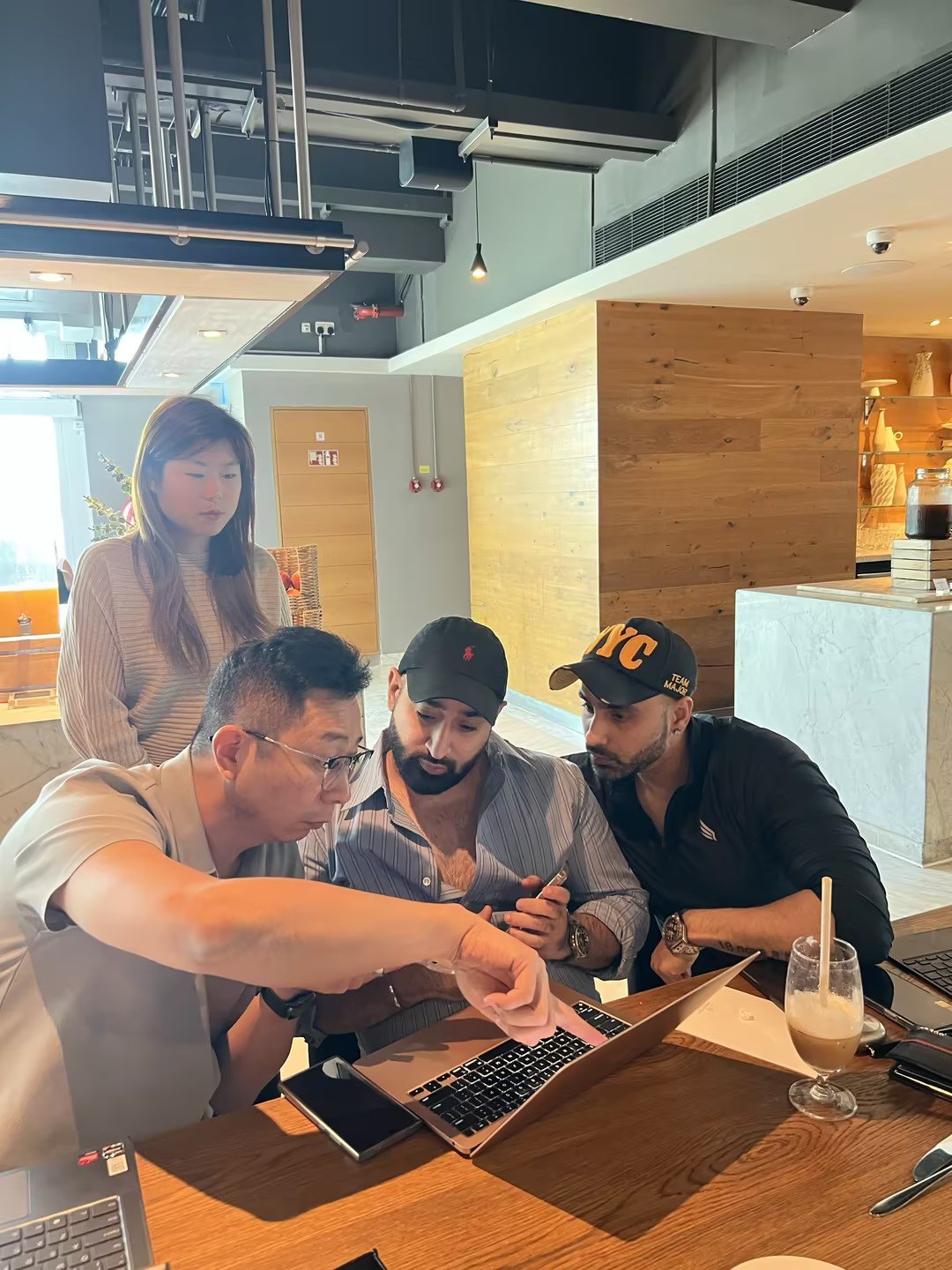
The briefing starts with a drawing, not a catalogue.
The Decision Moves Off the Stand
A stand is a poor place to specify anything. Buyers walk past forty suppliers in an afternoon, half the conversations are interrupted, and nobody can hear a throughput figure over the hall.
The meeting afterwards is different. There is time to open a layout, to ask what the product actually is, and to say out loud which parts of the request are standard and which ones will need a drawing. That is the difference between a business card and a project.

The Five Things a Briefing Settles
By the end of a working meeting, five things should be written down. If any of them is still vague, the quotation that follows will be vague too.
One: the product and the target weight
A former is specified by what comes off it, not by what goes in. Patty weight, diameter and thickness, or the cube size on a dicing line, or the slice thickness on a slicer — that number drives the mould plate, the blade set and the belt speed. A range is acceptable; "about right" is not.
Two: throughput per shift
Capacity is usually quoted per hour, but plants run per shift. The useful question is how many kilograms have to leave the line between the start of a shift and the end of it, including the stops for cleaning and changeover. A machine that hits the hourly figure but needs forty minutes to change a mould may still miss the shift target.
Three: layout and footprint
Length, width and ceiling height decide more than most buyers expect. A line that fits on paper can still fail on site because the outfeed conveyor has nowhere to go, or because the operator cannot reach both sides of the machine. This is the point where a plant drawing is worth more than a photograph.
Four: utilities
Voltage, frequency, phase, compressed air, steam, water and drainage. In the Gulf these are not formality: a line built for 60 Hz will not run on a 50 Hz supply without being reconfigured, and a machine that needs a washdown drain in the middle of the floor can force a building change. We covered this in more detail in the day-two note on Gulf configurations.
Five: the commercial frame
What is in scope and what is not: crating and sea freight, commissioning, the spares kit, training, and who signs off the drawing. Agreeing this at the table is cheaper than discovering it after the proforma invoice.
What Goes on the Screen
The laptop in front of the customer usually carries four things, in this order:
A layout drawing of the line as it would stand in their plant, with the machine footprints to scale.
Video of the machine running on product close to theirs, because a still photograph hides the part that matters — how the product transfers between machines.
The specification table, the same one printed on the product page, so the numbers can be checked rather than remembered.
A previous project drawing, where the client allows it, to show how a similar line was arranged.
Nothing on that screen is a commitment until it is drawn, and nothing is drawn until the five points above are settled.
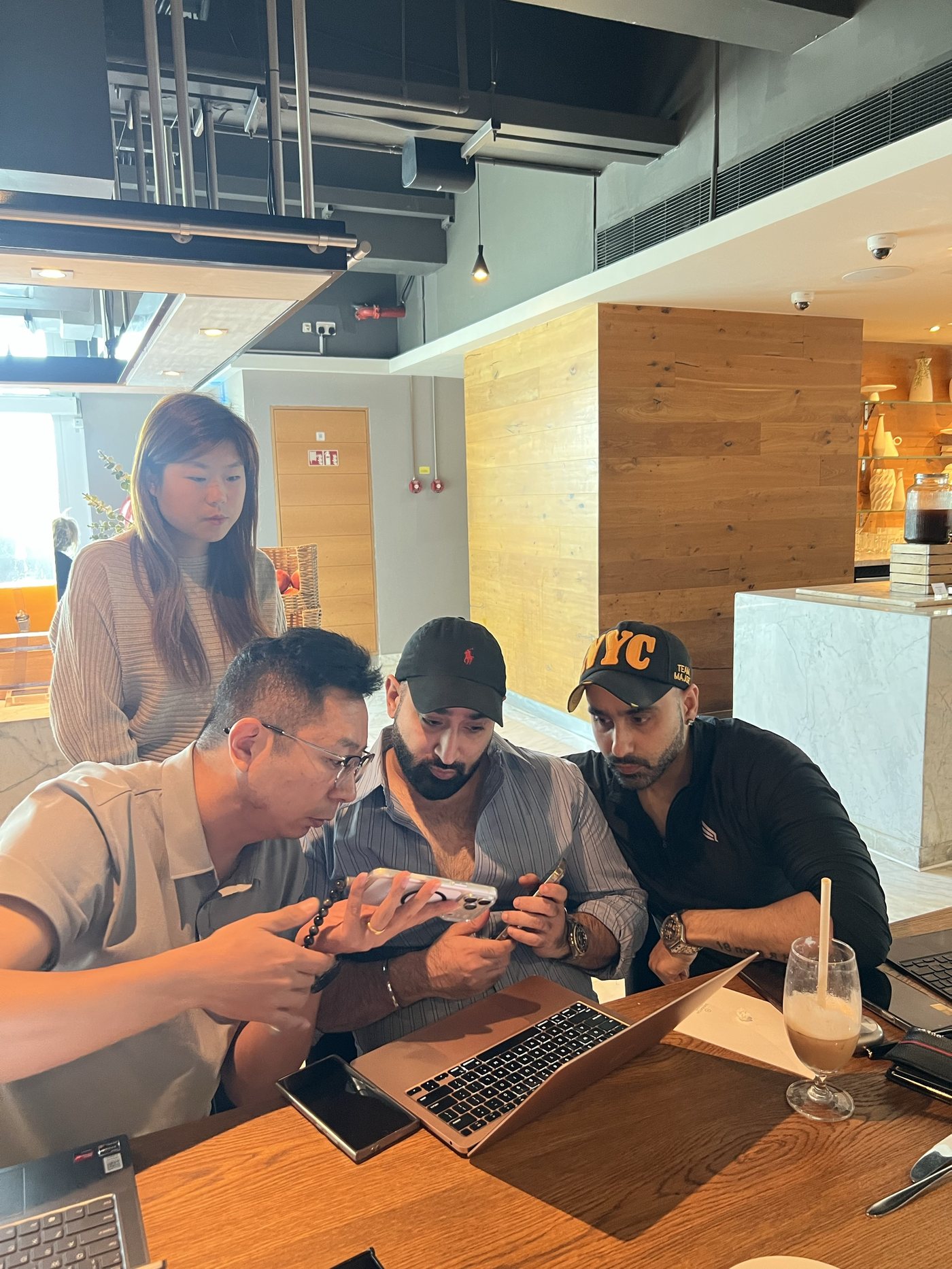
What the Customer Should Bring
A meeting that produces a usable drawing usually has four things on the customer's side of the table:
A product sample or photograph — raw material, not finished product.
The shift target, in kilograms or pieces, and the number of hours available.
A plant drawing or a dimensioned sketch, even a rough one.
The downstream constraint — what the product has to become after this line: frozen, packed, cooked, or shipped.
Without these, the conversation stays at the level of catalogue models, which is where most exhibition leads quietly expire.
After the Table: Drawing, Quotation, Sample Test
The sequence that follows is short and worth stating plainly, because it is where projects stall:
Drawing issued for approval, with the layout and the utility requirements.
Quotation against that drawing, so the price refers to a defined scope rather than a machine name.
Sample test where the product is unusual, run on the machine before shipment.
Proforma and production, then crating and sea freight.
The first step is the one that gets skipped. A quotation written before a drawing exists is a guess with a price attached.
Frequently Asked Questions
The Stand Was the Beginning
Stand S-404 closed with four processing lines on the wall and two machines on the floor — the day-one report covers what was there. The meetings that followed are the part that turns a poster into a plant, and they are why the work continues after the carpet is rolled up.
If you are picking the conversation up after the show, the exhibition page has the details of the stand, and the OEM and ODM service page sets out what a private-label version of the same line involves. The two ends of that line are described separately: the burger patty and chicken nugget process line at the front, and the patty stacker at the back.