



Meat Cutting Machine Safety
2023-09-25 14:40Meat Cutting Machine Safety: The Five Checks Before the Blade Turns
A meat cutting machine turns beef, lamb, tenderloin, chicken, duck breast and pork into shreds, dice, slices or strips far faster than hand cutting, and it leaves a smoother, more regular surface than a knife does. It also concentrates a lot of cutting force into a small opening. Most of what goes wrong on this type of equipment happens in a handful of routines that are easy to get right and easy to skip.
Meat cutting machine safety is less about the machine than about the routines around it. These are the five checks we walk operators through during on-site training, in the order they should happen.
Where the risk actually sits
The machine itself is simple. Product is fed through a set of blades, and the width and thickness of the cut are changed by changing the blade set, which is what lets one machine produce strips for stir-fry, cubes for stewing or slices for packing. Conveyor belt and knife set come apart quickly for cleaning and replacement.
The risk sits in three places: the blade set, the power supply, and the moment someone reaches in to clear a jam. Everything below is about those three.
1. Isolate the power before checking or repairing anything
Any inspection, repair or blade change starts with the equipment switched off and the power cord unplugged. Not stopped at the panel — unplugged. A machine that is merely switched off can still be started by someone else in the room, and that is the most common way hands end up where they should not be.
2. Fit the blade set correctly, then verify it by hand
The blade must be seated and fixed properly before the machine runs. After fitting, turn the set by hand and confirm it is mounted correctly and free of obstruction. A blade set that is not seated squarely will not cut straight, and it is also the set most likely to work loose under load.
3. Prepare the product, and stop the machine before clearing a jam
Cut the meat to a size and shape the machine can accept, and place each piece properly on the infeed. Product that is too large, too warm or loaded unevenly is what causes jams. When a jam does happen, press stop first and wait for the machine to come to a complete halt — never pull product out of a running machine.
4. Keep hands clear, and clean only after a full stop
Hands stay away from the blade area throughout operation, and cleaning or maintenance waits until the machine has fully stopped. The blade set and food contact parts are designed to be lifted out for washing, so there is no reason to reach into an assembled machine.
5. Check blades and parts for wear on a schedule
Blades and moving parts should be inspected at fixed intervals rather than only when the cut quality drops. A dull blade does not just cut badly — it invites operators to push product harder, which is when hands get closer to the blade than they should.
What training should cover
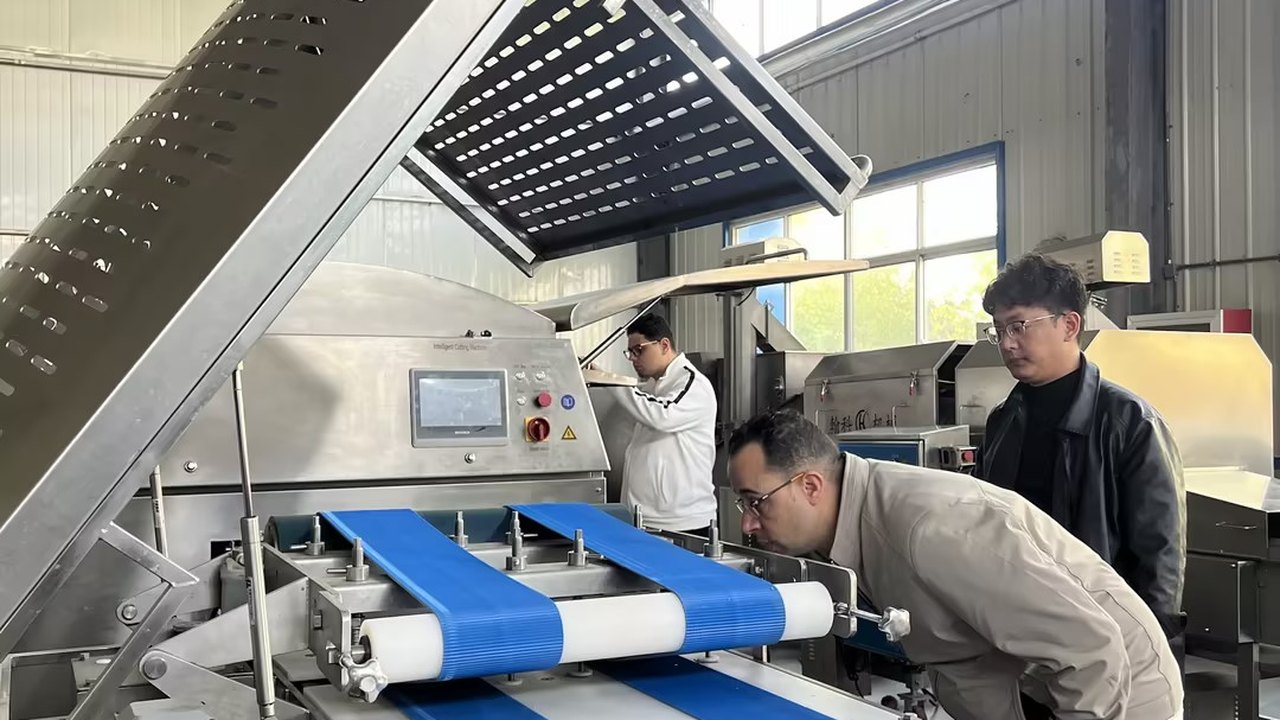
Operation is straightforward, but "straightforward" is not the same as "needs no training". After delivery, our after-sales staff go to site to train the customer's operators on the operation process and on the safety rules that apply to this equipment.
Training should cover, at minimum, the whole of the meat cutting machine safety routine: blade change and correct seating, power isolation, jam clearance, cleaning after a full stop, and the wear inspection schedule. On our strip cutting machines the blade set is enclosed and the machine stops when the cover is opened, but a guard is a backup, not a substitute for the routine.
Where the build helps
Several details exist to reduce the chance of an accident rather than to improve output. The whole machine is built in 304 stainless steel with food-grade non-metallic parts and conforms to HACCP requirements, so wash-down is part of normal operation instead of a special procedure. Electrical components are imported, which keeps the failure rate low and the behaviour predictable. Blades are imported food-grade steel, sharp and consistent, so operators are not tempted to force a tired blade through product.
None of that replaces the five checks. It only means the machine gives the operator fewer chances to get it wrong.
Frequently asked questions
Do operators need training before running a meat cutting machine?
Yes. The operation is simple, but the blade set, the power isolation routine and jam clearance all need to be taught rather than learned by watching. On-site training for the customer's staff is part of delivery.
Can a jam be cleared while the machine is running?
No. Press stop, wait for a complete halt, then clear the product. Reaching into a running machine is the single most avoidable cause of injury on this equipment.
How often should the blades be checked?
At fixed intervals rather than only when cut quality drops. A blade that is past its edge makes operators push harder, which brings hands closer to the blade.
Is 304 stainless steel enough for wash-down?
For most meat plants, yes — the machine is 304 stainless steel with food-grade non-metallic parts and conforms to HACCP. Where product is heavily salted or the cleaning chemicals are aggressive, the specification to discuss is grade 316.
Does the machine stop if the cover is opened?
On our strip cutting machines the blade set is enclosed and the machine stops when the cover is opened. It is a backup to the safety routine, not a replacement for it.
If you are training a new crew or reviewing the meat cutting machine safety routine on an existing line, the product pages for the fresh meat slicer and the strip cutter set out the blade and cleaning arrangements for each model. Cleaning routines are covered in more detail in clean equipment flow in an automatic meat cutting line, and training in machine operator training. If you are still choosing between models rather than running one, start with how to size a meat cutting machine. To have the safety routine reviewed against your own line, contact our engineers.