



Machine Operator Training
2026-10-14 11:32Operator Training on Food Processing Machinery for a Customer from the Maldives
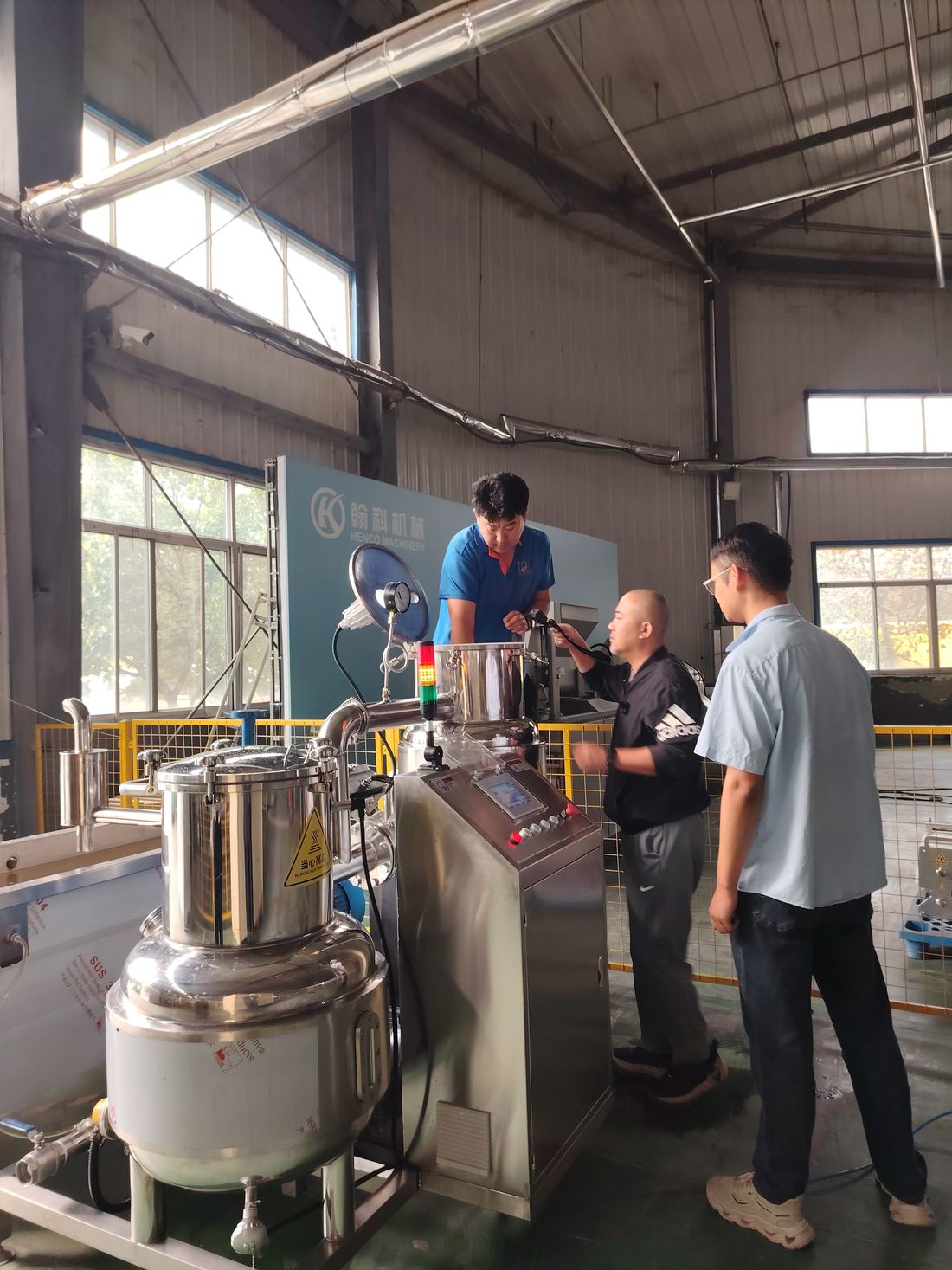
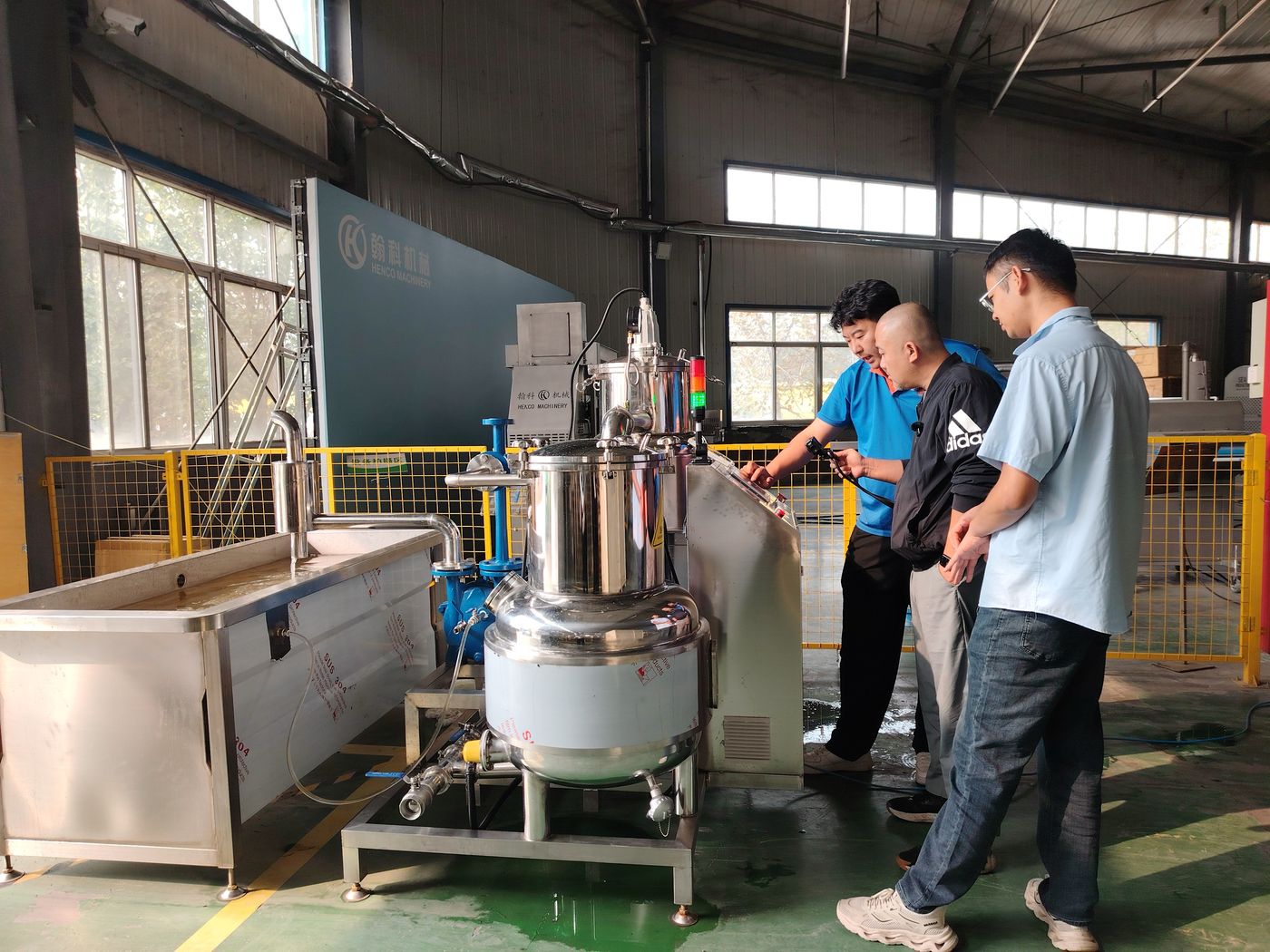
In October 2026, a customer's team from the Maldives came to our factory in Jinan for operator training on the machines in their order. The training was held at the machine itself, with the equipment assembled, wired and running — the same session in which the customer's operators take the control panel for the first time.
Machine training is one of those items that is easy to leave until the container has arrived, and expensive to leave until then. A team that has already run the machine under supervision in the factory starts production days earlier. A team that meets the machine for the first time on its own factory floor starts with a phone call.
Why Operator Training Happens Before the Machine Is Packed
Training at the factory has one clear advantage: the machine is still complete and still in one place. Nothing has been dismantled for shipping, no parts have been boxed, and every panel, valve and connection is where it will be when the line runs. On a machine with a sealed vessel, an insulated jacket and a control cabinet, that matters — the parts an operator needs to understand are the parts that are hardest to examine once they are wrapped and crated.
It is also the last moment at which a question can turn into a change rather than a spare part. If an operator asks why a particular valve is fitted, or whether a setting can be adjusted for their own product, the answer can still be given on the machine, and a modification can still be made before packing. After the container doors close, the same question becomes a service visit.
What the Training Session Covered
The session followed the machine in the order an operator meets it on a working day:
- The control panel. The touchscreen, the physical buttons and the emergency stop, and which functions are locked behind a password.
- The start-up sequence. What has to be checked and closed before the machine is switched on, and in what order.
- Product loading and the working cycle. How product enters, what happens inside the vessel, and how the machine is emptied at the end of a batch.
- Settings and recipes. Temperature, time and working parameters, and how a setting is saved so the next shift can call it up rather than guess it.
- Alarms and the status lamp. What each alarm means, which ones stop the machine, and what the operator should do before calling for help.
- Cleaning and strip-down. How the machine is opened, cleaned and reassembled — including the parts that are easy to put back wrongly.
- Safety devices. Guards, interlocks and emergency stops, and why a bypassed guard is a production risk rather than a convenience.
- Daily checks and service points. What to look at every shift, where to lubricate, and what to record.
- Documentation. The manual and the spare-part information that travels with the machine, and how to read them.
What the Operators Should Be Able to Do Afterwards
A training session is judged by what the team can do unaided the following week, not by what was demonstrated. By the end of a session the aim is that the customer's operators can:
- start, run and stop the machine without help;
- set the machine up for their own product rather than the demonstration product;
- strip it down, clean it and reassemble it correctly;
- tell the difference between a normal reading and a fault;
- carry out the shift and weekly maintenance items themselves; and
- know which spare parts are worth holding on the shelf, and which are not.
Training at the Machine, Not in a Classroom
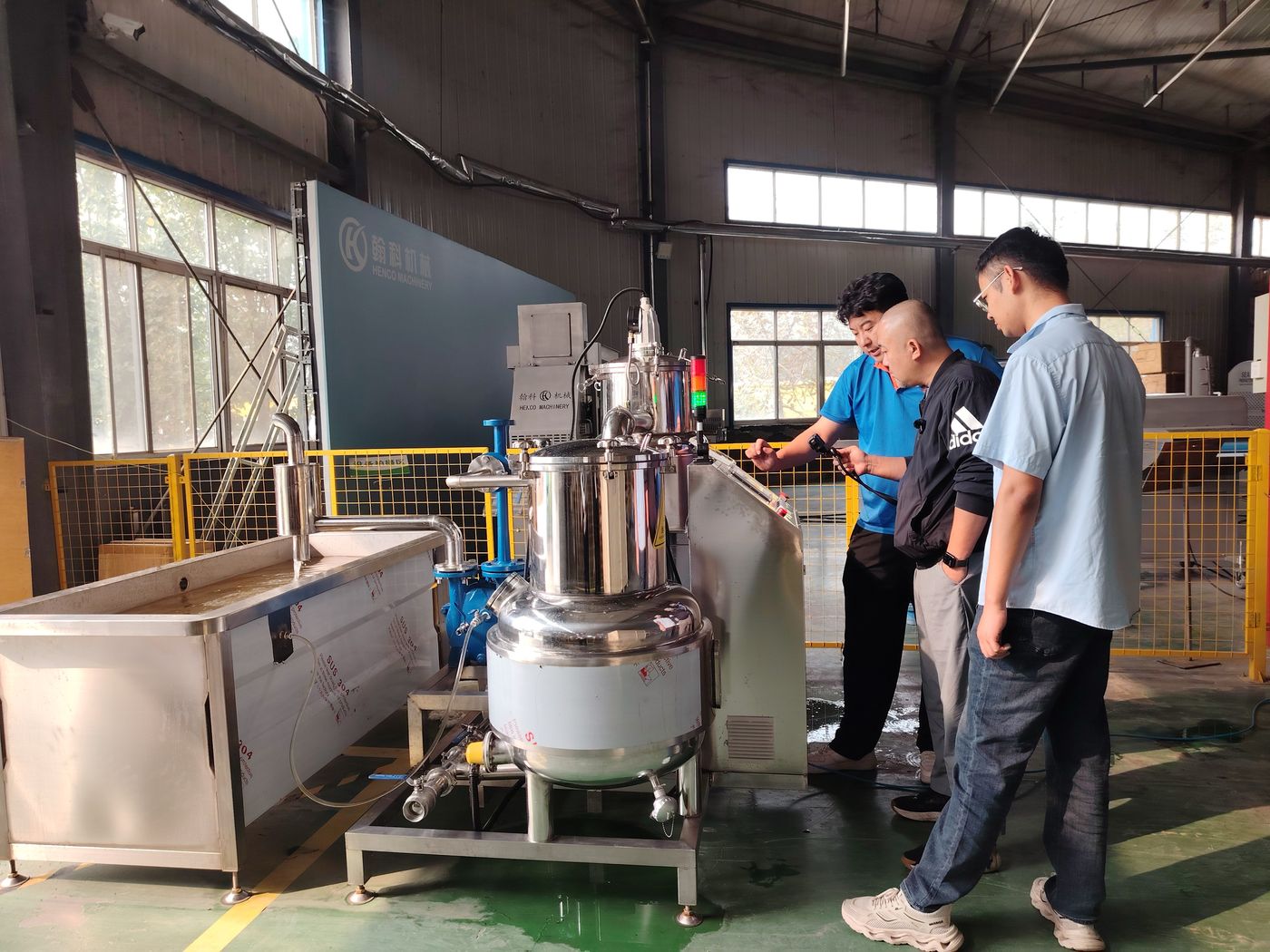
Because the training happens at the machine, the working language matters less than it would in a classroom. A sequence can be shown, then repeated by the operator, then performed alone while the trainer watches — and a machine does not need a shared language to be operated. In this session the customer's people moved between the vessel, the piping and the control cabinet, and the sequence was walked through step by step at each of them.
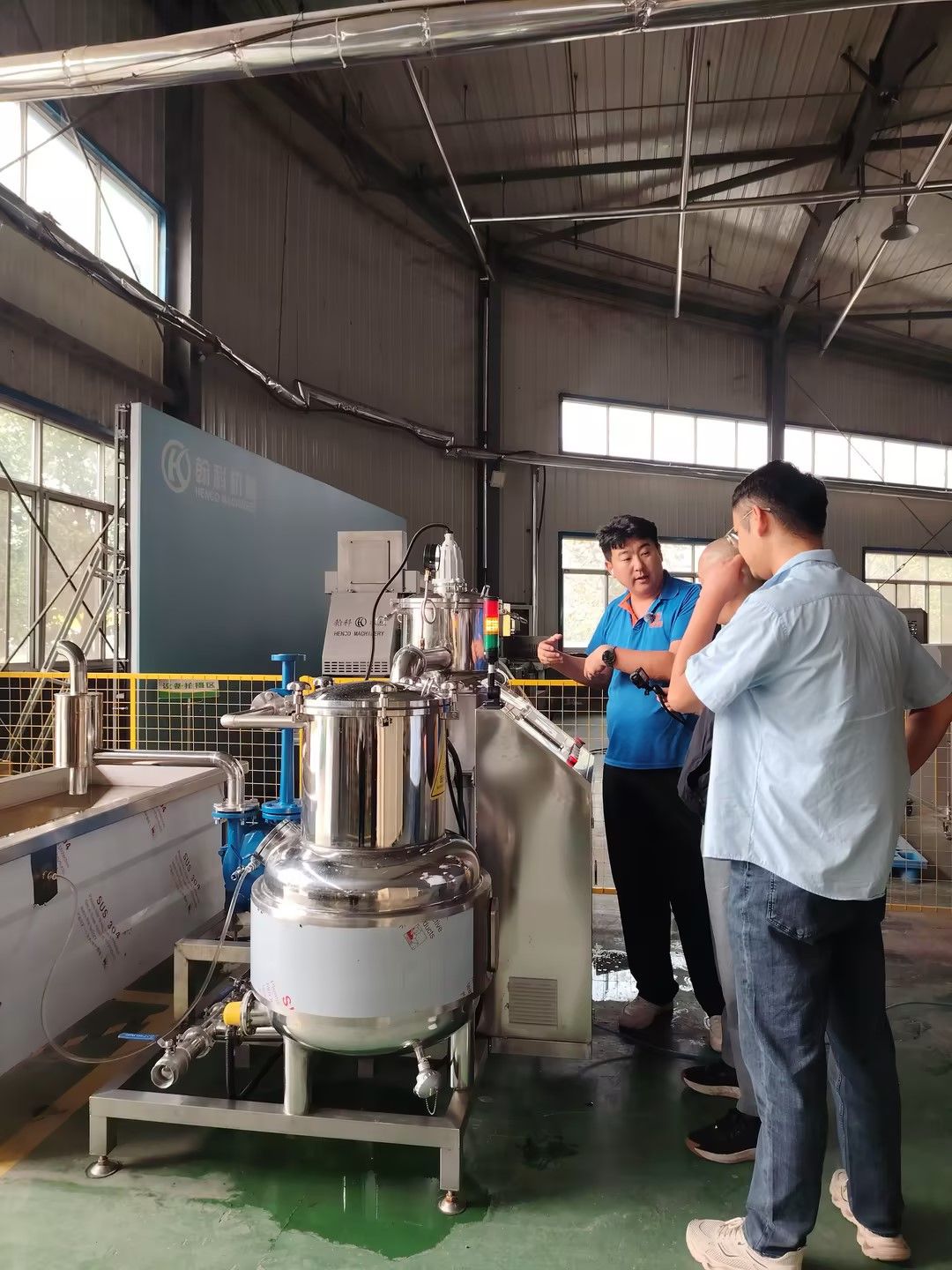
The written record still matters. Whatever is explained at the machine is easier to keep if it is filmed on the customer's own phone and noted against the manual, which is why the operators were encouraged to photograph the settings and the wiring before the machine was packed.
Where Training Fits With a Trial Run and a Factory Acceptance Test
These three things are often spoken about as if they were the same, and they are not:
- A trial run answers whether the machine makes the product correctly — weight, shape, output — using the buyer's own product.
- A factory acceptance test is an inspection, often by a third-party agency acting for the buyer, that the machine matches the order before it is packed. We describe how that is carried out in a factory acceptance test carried out by SGS for a Spanish OEM customer.
- Operator training answers whether the buyer's own team can run the machine after it is installed.
They are usually arranged in that order, and a customer who has done all three arrives at their own plant with a machine that produces the right product, matches the order, and has a team that already knows how to run it.
After the Training: Packing and Handover
Once the training and any agreed changes are finished, the machine goes into export packing. How that is done — the protection layers, the crate types, the ISPM 15 heat treatment for solid wood and the record kept of the packing itself — is set out on our equipment packaging page.
If you are specifying a line rather than a single machine, the sequence of stages is described in our process flow overview, and the individual machines are grouped under food processing lines. For the wider question of how the stages of a meat or food plant fit together, our guide to meat processing equipment covers the equipment categories in detail, and a similar factory-floor visit by a customer from Turkey, where a forming machine was run before purchase, is documented in the Turkish patty forming test.
Frequently Asked Questions
Do you provide operator training on the machines we order?
Yes. Training is given on the machine itself, with the equipment assembled and running, so that the operators work on the machine they will actually be running rather than on a description of it.
When does operator training take place?
It is normally arranged at the factory before the machine is packed and shipped, while the machine is still complete and every part is accessible. That is also the last point at which a question can be turned into a modification rather than a service visit.
Who should attend from our side?
The people who will operate the machine day to day, and at least one person responsible for its maintenance. Someone who will not handle the machine but has to plan production around it is also worth sending, because the training is where realistic output figures and changeover times can be discussed.
Can our operators work the machine themselves during the training?
Yes, and they should. The aim of the session is that your operators run the machine themselves, set it up for their own product, and complete a cleaning and reassembly cycle, with our engineer watching rather than doing.
What is covered in a training session?
The control panel and start-up sequence, product loading and the working cycle, settings and recipe storage, alarms and the status lamp, cleaning and strip-down, safety devices, daily checks and service points, and the documentation supplied with the machine.
How does training differ from a factory acceptance test?
A factory acceptance test is an inspection that the machine matches the order, and it is about the machine. Operator training is about your team, and it is judged by what your operators can do unaided after the machine is installed. Both normally happen at the factory before shipment, and they are usually arranged alongside a trial run on your own product.
Arranging a Training Session
Training is arranged together with the trial run, so that the machine is set up for your product before your operators take it over. Tell us the product, the output you need per shift and the number of people who will be trained, and we will plan the session around your shift pattern. You can reach us through the contact page.