



Meat Processing Equipment
2026-10-12 14:48Meat Processing Equipment: Types, Process Flow and How to Choose
Meat processing equipment is the machinery a plant uses to turn incoming carcasses, primal cuts or frozen blocks into saleable portions and finished products. In practice it is not one machine but a category: saws, slicers, dicing and strip-cutting machines, forming machines, coating equipment, mixers, conveyors and packing units. Which of those you actually need depends far less on the machines than on the product you intend to sell.
This guide is written for the people who have to make that decision — plant managers specifying a new line, food manufacturers moving from manual preparation to machine production, and distributors building a range for their own market. It covers what the equipment categories are, how they connect into a process flow, what to specify, and the mistakes that cost buyers the most money.

What Counts as Meat Processing Equipment
Because the term is a category rather than a single product, the fastest way to specify it is to work through the stages of the process. Most plants need some combination of the following.
Cutting and Portioning
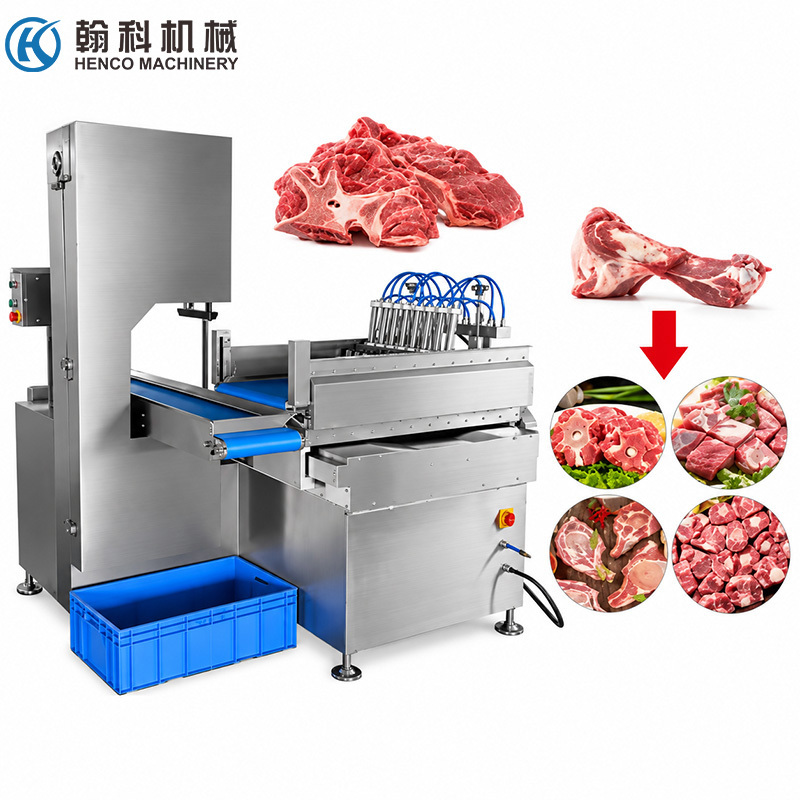
Cutting equipment reduces whole product into portions of a defined size. A meat and bone saw handles bone-in and frozen product; a slicer handles cooked or fresh meat; strip-cutting and dicing machines produce the cubes and strips that feed further processing. Portion accuracy decides your yield, and yield decides your margin — which is why the carriage, the guide and the blade tensioning matter more than the headline motor size.
Forming
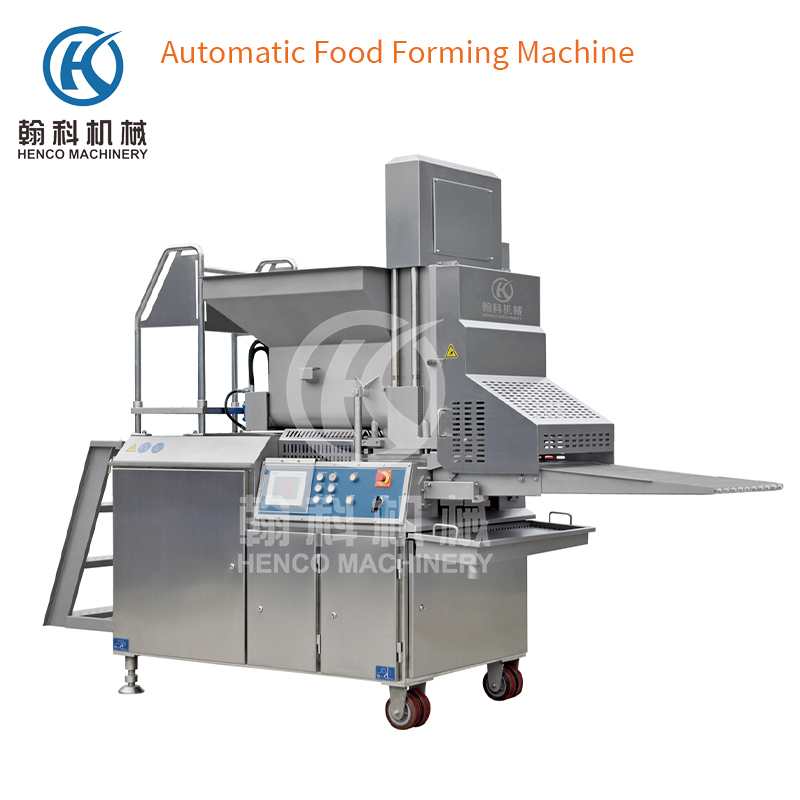
Forming machines turn minced or emulsified product into a fixed shape and weight: patties, nuggets, meatballs, kebabs. The purpose of a forming machine is weight control, not speed. A machine that holds tolerance across a shift is worth more than one that produces faster and drifts, because every gram over target is product you gave away.
Coating: Battering, Breading and Flouring
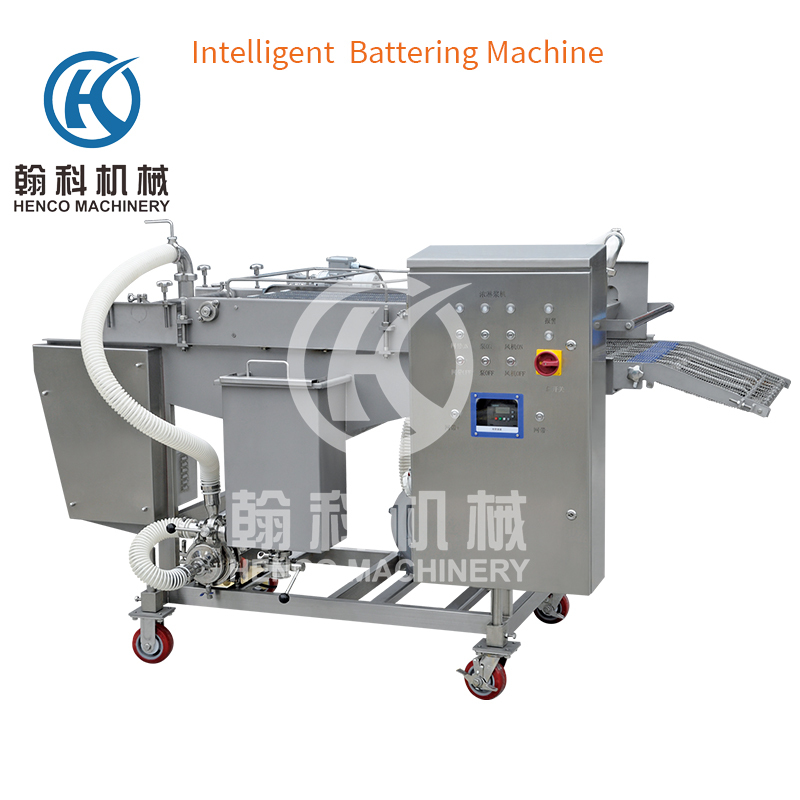
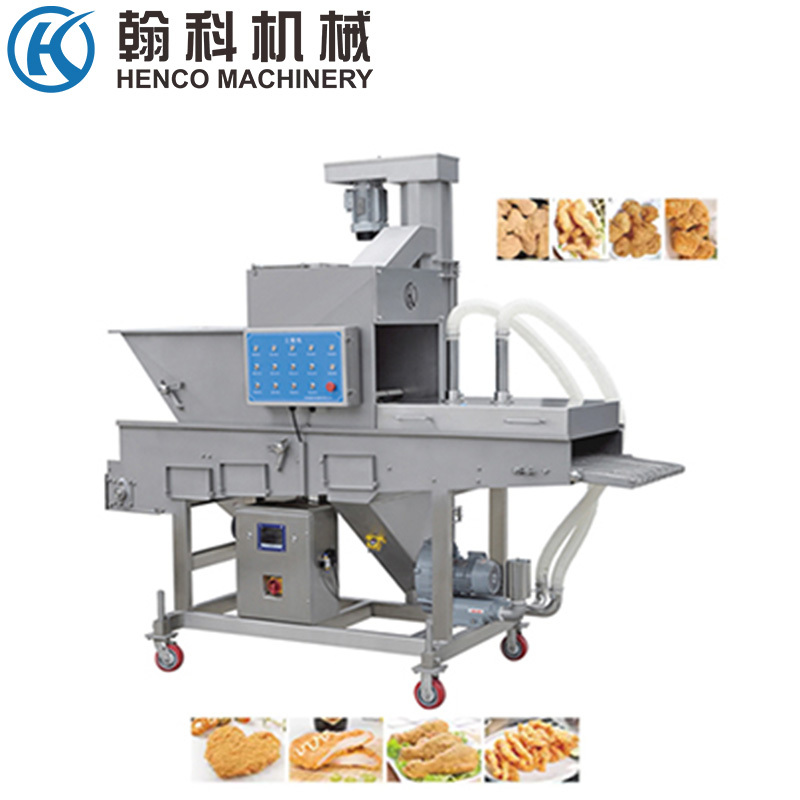
Coating equipment applies the batter, flour or crumb layer that defines the finished product. Batter machines and breading machines are normally specified as a pair, and on a breaded line the crumb recovery system deserves as much attention as the application itself, because crumb is a real cost per tonne of output.
Mixing and Preparation
Mixers, blenders and tenderisers prepare the product before forming. On a marinated or breaded line the usual sequence is cut, then mix or marinate, then form, then coat, then pack. Getting that order right at the specification stage prevents a line that works machine by machine but not as a line.
Conveying and Line Integration
Conveyors link the machines and set the pace of the line, and they are the part buyers most often underestimate. Belt type, transfer points, incline and the hygiene design of the frame all decide whether product moves cleanly between stages or accumulates at the joins. Belt tracking that is wrong by a few millimetres becomes a maintenance problem within weeks.
Auxiliary and Packing Equipment
Finally there is the equipment around the process: packing and sealing units, metal detection and checkweighing where the product requires it, and the wash-down and drainage provision that food safety auditors will ask about. These items rarely get mentioned in early quotations and almost always appear in the final one, so it is worth raising them at the start.
How the Machines Fit Together in a Process Flow
Equipment lists are easier to read as a flow. A typical line for portioned and coated products runs in this order:
- Receiving and chilling. Product arrives and is held at temperature. Nothing downstream can recover from a break here.
- Cutting and portioning. Whole product is reduced to the sizes the rest of the line is built around.
- Mixing or marinating. Flavour and binders are applied and the product is held for the required time.
- Forming. Product is shaped and weighted to the finished specification.
- Coating. Batter, flour and crumb are applied and recovered.
- Packing and inspection. Finished product is packed, weighed and, where required, passed through detection equipment.
Read as a whole, the flow explains why equipment is usually bought as a food processing line rather than as individual machines: the pace is set by the slowest stage, so the value of a fast machine depends entirely on what sits on either side of it.
How to Specify Meat Processing Equipment
A specification has to survive contact with your own plant. Six things decide whether it does.
- Capacity. Specify in kilograms per hour at your real shift length, not at peak machine speed. Machines are rated on short runs; plants operate on long ones.
- Product. Fresh or frozen, bone-in or boneless, and the temperature the product will be at when it reaches the machine. Frozen product is abrasive and changes both the motor requirement and the blade choice.
- Materials. What the product contacts, and what the cleaning chemicals will contact. This is covered in detail below.
- Cleaning. How long a strip-down takes, and whether it can be done without tools. This is a daily labour cost, not a one-off purchase decision.
- Safety devices. Emergency stops, fixed guarding and warning labels. These are checked by inspectors and by your own customers' auditors.
- Site conditions. Voltage, phase, available footprint, drainage and headroom. A correct machine in a room that cannot take it is still a wrong machine.
Food-Grade Materials: What to Insist On
All food contact parts should be grade 304 stainless steel as a minimum. Grade 304 contains roughly 18% chromium and 8% nickel, and that balance is what keeps a surface resistant to rust in a permanently wet processing room.
Where product is salty, or where caustic cleaning chemicals are used every day, grade 316L is the better specification. Grade 316L adds 2–3% molybdenum on top of the chromium and nickel, and it is the molybdenum that resists chloride attack and pitting. Salt and chlorides are the usual reason a "stainless" machine corrodes within a few years, and the fix is specified at purchase, not after.
Cleaning, Downtime and the Real Cost of a Machine
Water is the reason cleaning design matters as much as material choice. Lean meat is roughly 70% water, and every cut face loses moisture until the product is chilled or packed — while that same water carries bacteria. Smooth welds, sloped surfaces, tool-free guards and drainage that actually drains are the practical answers, and they are worth checking machine by machine rather than accepting as a brochure claim.
The honest question to ask of any machine is not what it costs to buy but what it costs to own: cleaning minutes per shift, blade and belt consumption, the wear items you will hold on the shelf, and how quickly a spare can reach you. That total is what separates a cheap machine from an economical one.
Buying Meat Processing Equipment from Overseas
Most buyers of this equipment are buying across a border, so a few practical points belong in the decision.
- Lead time. Build time plus sea freight, not build time alone.
- Packing. Machines travel by container and are braced and protected accordingly — see our equipment packaging process.
- Documentation. Paperwork that clears customs at both ends matters as much as the machine; our export documentation service covers it.
- Voltage and standards. Specify your market's supply and any local compliance requirement before the machine is built, not after it lands.
- Spare parts. Agree what you will hold on site and how replacements ship.
- Inspection before shipment. A factory acceptance test lets you or your own third-party agency verify the machines before they are packed. One factory acceptance test conducted by SGS is documented on this site as a worked example.
Where a buyer intends to sell the equipment under their own name, the same project is handled as an OEM and ODM project, with the machine marking, manuals and packaging prepared in the buyer's brand. Buyers who want to know who they are dealing with before specifying can read how we work as food processing machinery manufacturers.
Common Mistakes When Buying Meat Processing Equipment
- Buying a machine instead of a stage. The machine has to accept what comes to it and feed what follows. Sized in isolation, it becomes the bottleneck.
- Specifying capacity at peak speed. Nameplate figures come from short runs. Specify at your real shift average.
- Leaving materials to chance. If the quotation does not state the grade of stainless steel for food contact parts, ask in writing.
- Ignoring cleaning time. A machine that takes an extra 30 minutes to strip down costs a working week of labour every year.
- Treating spare parts as an afterthought. Decide the wear-item list at purchase, while the supplier is still motivated to be helpful.
- Skipping inspection before shipment. It is far easier to correct a machine at the factory than after the container is unloaded.
Next Steps
The practical way to specify meat processing equipment is to work backwards from the product you intend to sell. Tell us the product, the cut or shape, and the output you need per shift, and the specification follows from those three answers rather than from a machine catalogue.
If you would like a recommendation for your own line — or a comparison against equipment you already run — send us the details of your product and target output through our contact page and we will come back with a configuration and the machines it requires.
Frequently Asked Questions About Meat Processing Equipment
What is meat processing equipment?
Meat processing equipment is the category of machinery used to convert carcasses, primal cuts or frozen blocks into saleable portions and finished products. It includes saws, slicers, dicing and strip-cutting machines, forming machines, coating equipment, mixers, conveyors and packing units.
What equipment does a small meat processing plant need?
A small plant usually starts with cutting and portioning equipment, then adds forming and coating machines as its product range grows. The right starting point is the finished product you intend to sell, since that determines which stages the line actually requires.
What is the difference between a bone saw and a meat slicer?
A bone saw cuts bone-in and frozen product, which requires a blade and carriage designed to hold a block firmly while it passes the blade. A meat slicer cuts boneless fresh or cooked product into slices of a set thickness. Many plants use both.
Which stainless steel should food contact parts use?
Grade 304 stainless steel is the minimum for food contact parts, containing roughly 18% chromium and 8% nickel. Where product is salty or caustic cleaning chemicals are used daily, grade 316L is the better choice because the 2–3% molybdenum it contains resists chloride attack and pitting.
What should be included in a meat processing line specification?
A specification should state real capacity in kilograms per hour at normal shift length, the product and its temperature, food contact materials, cleaning method and strip-down time, safety devices, and site conditions including voltage, footprint, drainage and headroom.
Can meat processing equipment be inspected before shipment?
Yes. A factory acceptance test allows the buyer, or an independent inspection agency acting for the buyer, to examine and measure the machines at the manufacturer's factory before they are packed. This is the point at which specification differences are cheapest to correct.