



SGS Factory Acceptance Test for a Spanish OEM
2026-09-29 15:44SGS Conducts the Factory Acceptance Test on a Spanish OEM Food Processing Line
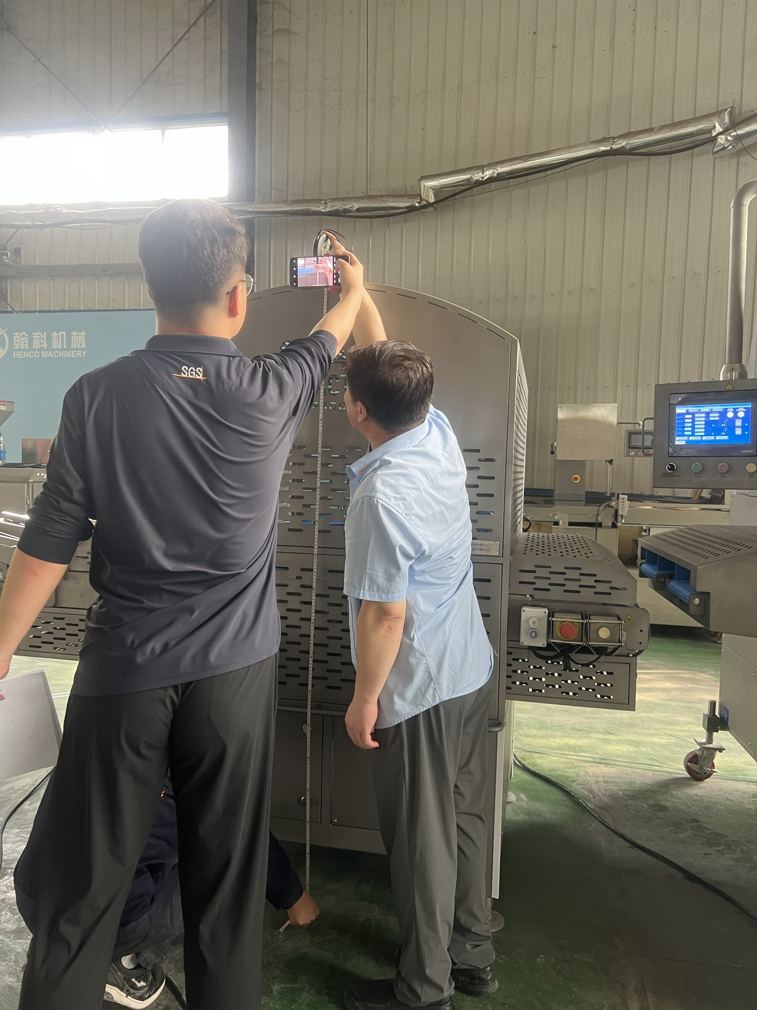
In September 2026, inspectors from SGS came to our factory in Jinan, China, to carry out the factory acceptance test on a custom food processing line built for a Spanish OEM customer. The machines had already been assembled and run in. The purpose of the visit was to verify them, machine by machine, before they were packed for shipment — and to put that verification in writing.
For the customer, the inspection was the last checkpoint before the equipment left China. For us, it was a normal part of the order: the buyer appoints an independent agency, that agency signs off on the machines, and the finished equipment leaves the plant carrying the buyer's brand rather than ours.
What a Factory Acceptance Test Actually Is
A factory acceptance test, usually shortened to FAT, is an inspection carried out at the manufacturer's plant before the equipment is packed and shipped. It exists to answer one question: is the machine I ordered the machine I am getting?
The test is normally performed by the buyer, by the buyer's engineering team, or by an independent inspection agency acting for the buyer. When a customer orders a factory acceptance test through SGS, the inspection is carried out by SGS surveyors who report to the buyer rather than to the supplier. That independence is the entire point. A report signed by a manufacturer about its own machines is worth less than a report signed by an agency the buyer appointed.
For a buyer sourcing processing equipment overseas, the factory acceptance test is often the only occasion on which the finished machine is examined in person by someone acting for them. A problem found at the factory is a repair. The same problem found after the container has been unloaded at the destination port is a repair, a delay and a shipping claim.
What the SGS Inspectors Checked
The inspection moved through the line in sequence, so that by the end of the visit every unit had been examined the same way. The checks carried out on site included:
Identification. Each unit was matched against the order, and the machine markings were photographed as evidence of what was inspected.
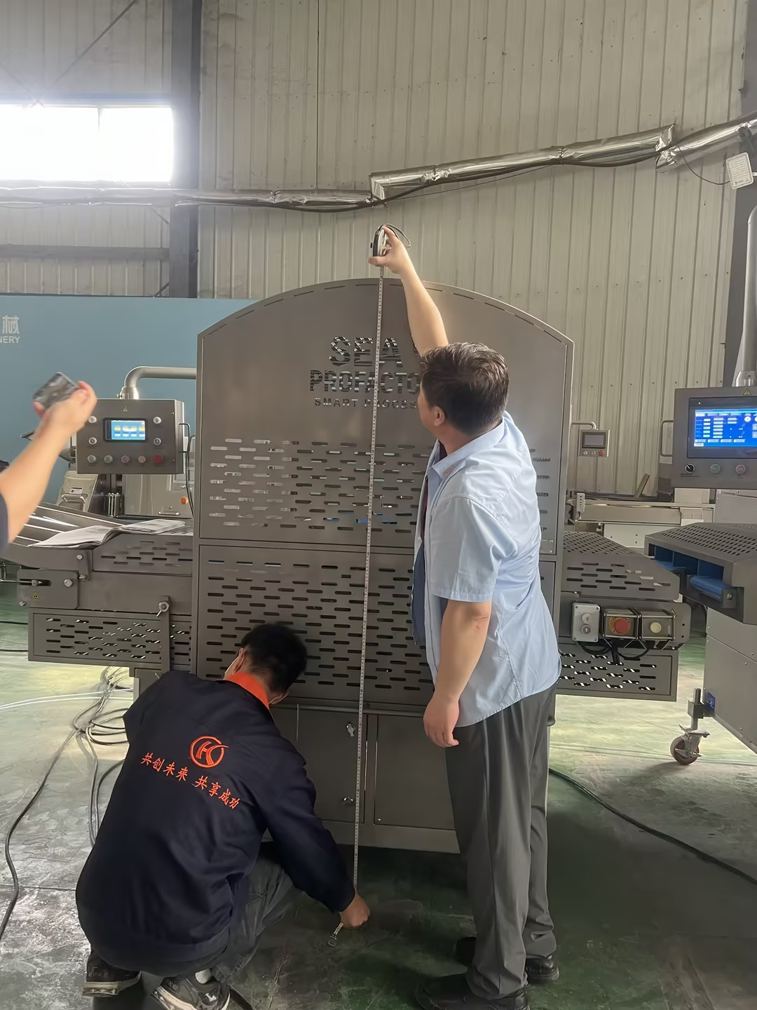
Dimensions. Dimensions were measured on the machine itself with a tape measure rather than taken from a drawing, because a processing line has to fit a room that already exists.
Construction and finish. Panels, frames, welds and the machine base were inspected visually, including the underside of the units and the area around the castors and feet.
Conveyors and product path. Belt condition, belt tracking and the transfer points between machines were examined, along with the guards that cover them.
Controls. The touch-screen control panel and the electrical cabinet were checked against the agreed specification.
Safety devices. Emergency stops, fixed guarding and warning labels were verified on each machine.
Documentation. Findings were recorded on multi-page inspection checklists completed on site, then supported with photographs of each unit.
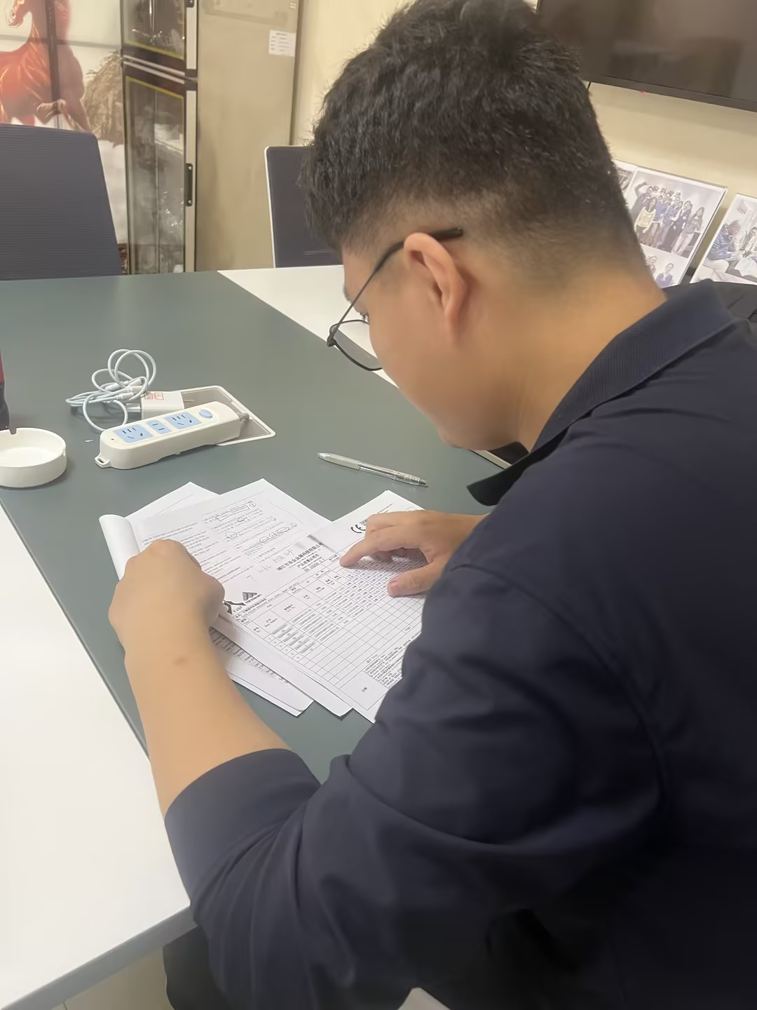
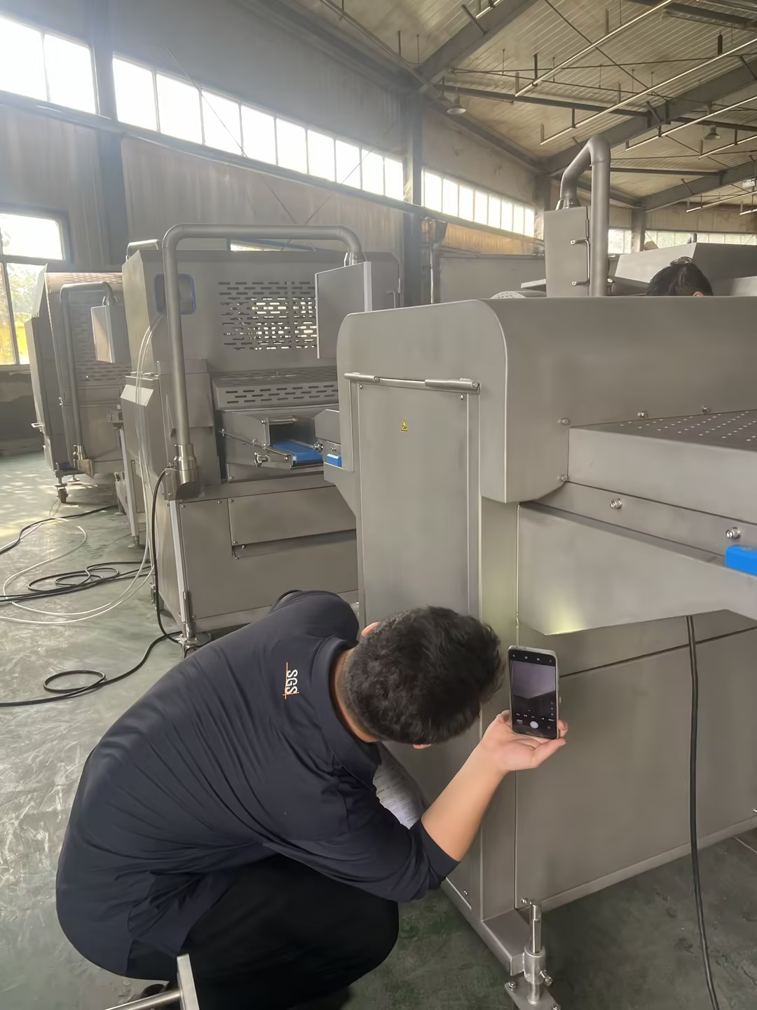
Photographs are taken during a factory acceptance test for the same reason an auditor takes them: they are the evidence in the report. A written note that a guard is present is an opinion. A photograph of the guard is a record.
Why This Project Needed a Third-Party Inspection
The customer is an OEM. The equipment is sold in their market under their own brand, which changes the way a buyer looks at an inspection. When your name is on the machine, an equipment fault is not only the supplier's problem — it becomes your warranty claim, in your language, in front of your customer.
That is what makes a third-party factory acceptance test worth arranging. It is not primarily a check on the supplier's reputation. It is the buyer protecting their own brand in their home market, with a report produced by an agency their own customer can recognise.
It also changes what has to be ready at the factory. In a private-label project, the machine markings, labels and manuals are prepared in the buyer's name and language before the machines ship, and the inspection is the point at which those details are confirmed against what was agreed.
Built to the Customer's Own Brand
Every machine in this project was manufactured under the customer's own brand. The name on the machine panel belongs to the buyer, not to us, and the line markings follow the customer's design language rather than our own. A buyer inspecting the finished equipment therefore sees their own brand on the machine that is about to represent them in their market.
For buyers planning a private-label range, the process behind this project is described on our OEM and ODM service page, which covers what we can brand, how machine configuration and custom engineering are handled in a private-label project, and how documentation and packaging are prepared in the customer's name.
Video: the Factory Acceptance Test Conducted by SGS
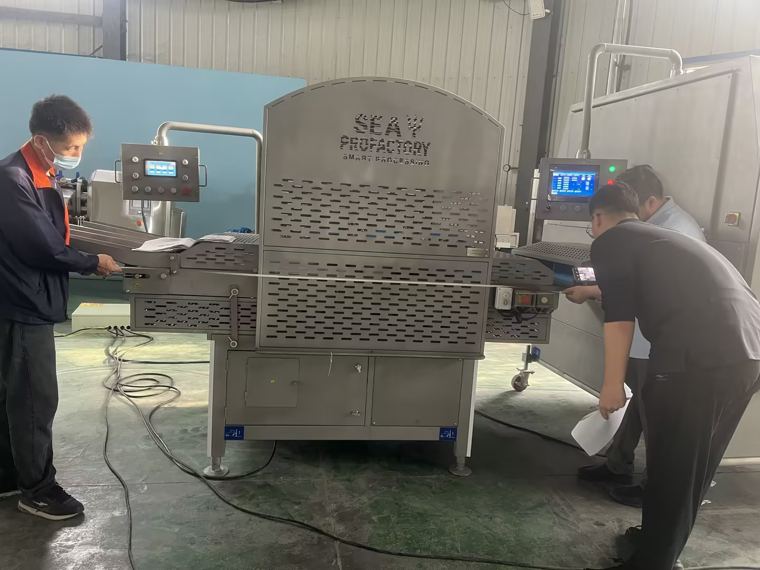
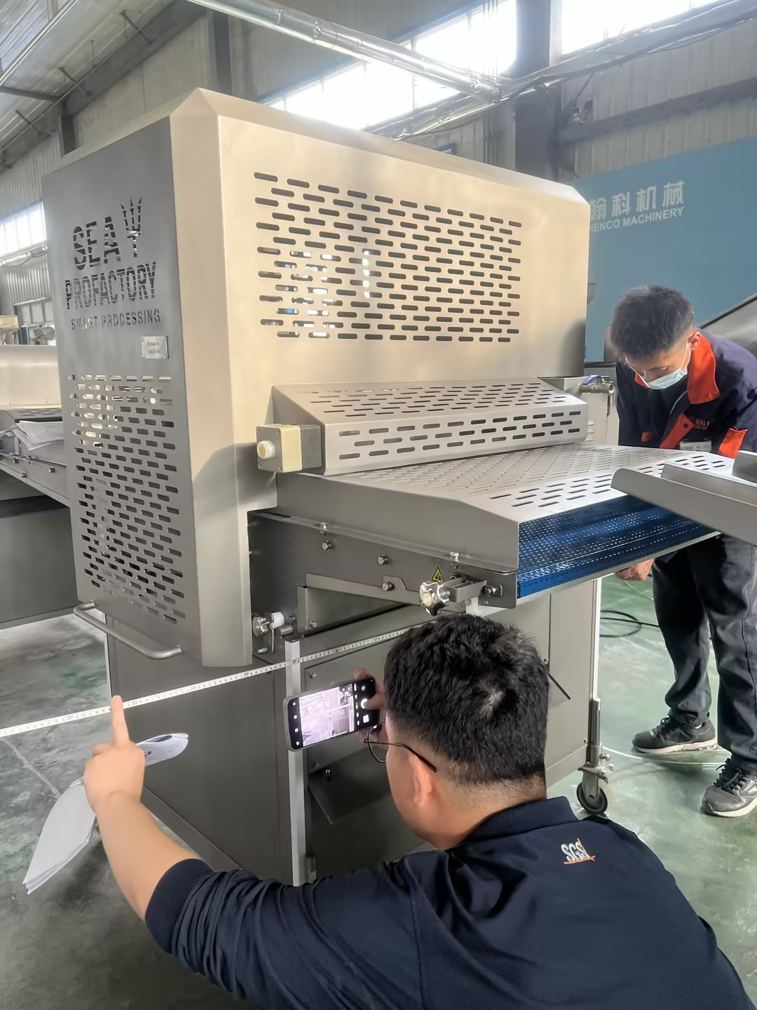
The inspection was filmed on site. The video below shows the SGS surveyors working through the line during the test, with our engineers on hand to open panels and take measurements as the checks were carried out.
If the video does not play in your region, you can watch it directly on YouTube: FAT Test Conducted by SGS.
What Makes a Factory Acceptance Test Run Smoothly
An FAT goes well or badly long before the inspectors arrive. The projects that run cleanly share a few things in common:
The machines are finished first. The inspection should verify equipment that is already assembled and running, not debug equipment that is still being built.
The order specification is fixed in writing. Inspectors check machines against an agreed specification. If that document is vague, every point becomes a discussion.
The right people are on site. Someone who can open panels, explain the control logic and take a measurement needs to be available for the whole visit.
Language is planned for. Where the buyer and the inspector do not share a language, agreeing in advance how technical points will be translated removes most of the confusion.
There is time after the inspection. Items raised on the day are easier to close while the inspectors are still in the building.
The same preparation applies to the wider equipment range behind this project, from complete food processing lines to the conveying equipment that links individual machines together.
After the Inspection: Documentation, Packing and Shipment
When a factory acceptance test is finished, the remaining stages are orderly ones: the inspection report is issued, final export documentation is prepared, and the equipment is packed for sea freight and loaded into the container.
Machines for an overseas customer are packed for a long journey rather than a short one — braced inside the container, protected against moisture and handling, and documented so that customs clearance at the destination is not held up by missing paperwork. Our professional equipment packaging and export documentation assistance pages describe how that stage is handled.
Frequently Asked Questions About Factory Acceptance Tests
What is a factory acceptance test?
A factory acceptance test is an inspection carried out at the manufacturer's factory before equipment is packed and shipped. It confirms that the machines match the agreed specification, so that problems are found at the factory rather than after the equipment has been shipped overseas.
Who performs a factory acceptance test?
The buyer, the buyer's engineering team, or an independent inspection agency appointed by the buyer. The inspection is carried out for the buyer, which is what gives the resulting report its independence from the manufacturer.
Can SGS carry out the inspection for us?
Yes. Where a customer appoints an agency such as SGS, the inspection is arranged at our factory and the surveyors report to the customer. This is how the Spanish OEM project described on this page was inspected.
What if the inspection finds something that needs attention?
A typical factory acceptance test report separates items that should be corrected before shipment from observations and recommendations. Equipment is not packed until the items the buyer requires have been addressed and confirmed.
Does a factory acceptance test replace commissioning at our plant?
No. The factory acceptance test verifies the equipment at the manufacturer's factory. Commissioning, installation and operator training take place at the buyer's site after the machines arrive.
Can we attend the test ourselves?
Yes. Many customers attend the factory acceptance test in person, and some send both their own engineers and an independent agency. Customers who cannot travel can follow the inspection through the photographs and video recorded on site.